
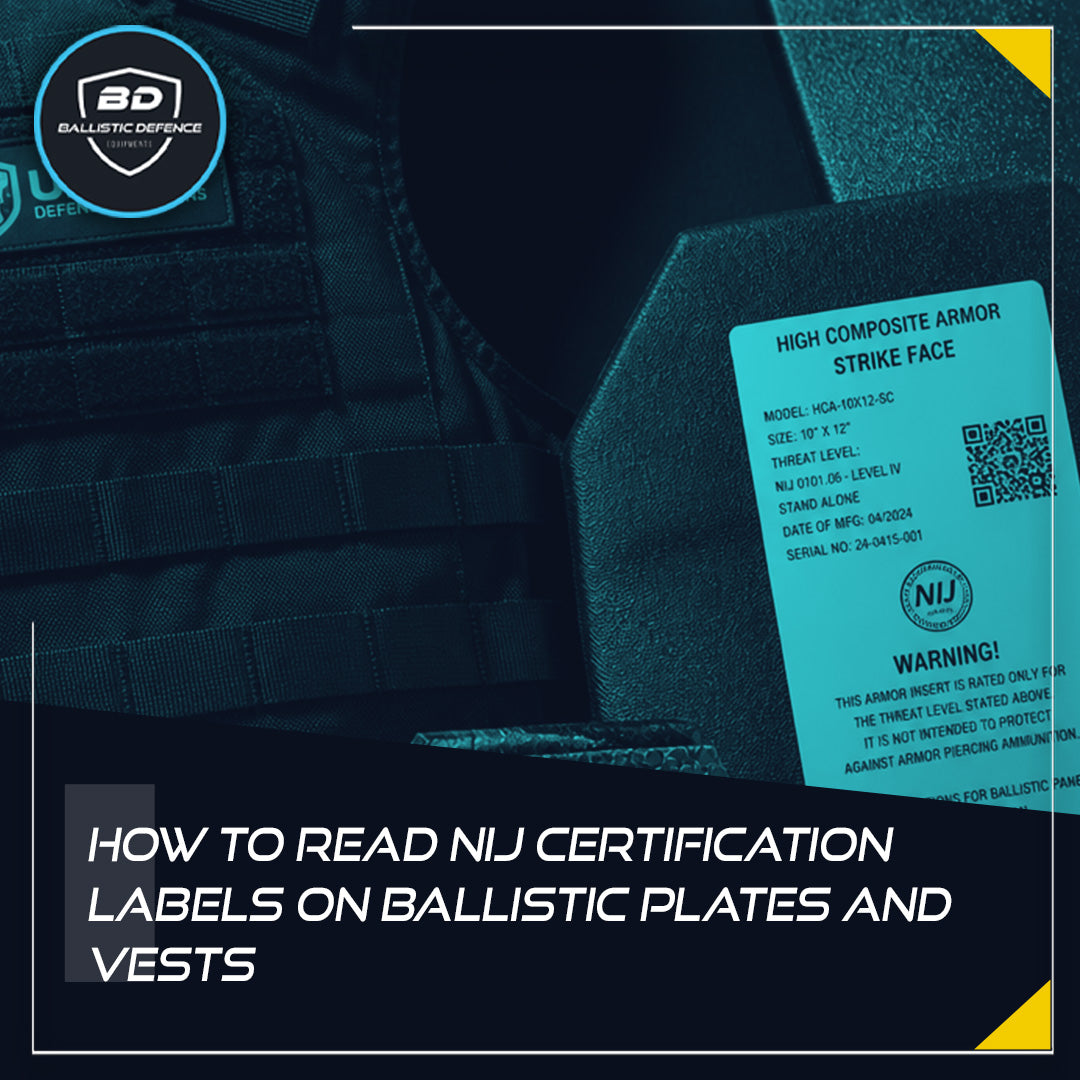
Reading NIJ certification labels correctly is one of the most important skills for any body armor buyer in 2026. The label on a ballistic plate or vest tells you what threats the armor is tested to stop, which standard it was certified under, and whether it is genuinely compliant, yet many buyers don't know how to interpret what they're looking at.
Understanding these labels helps you avoid mislabeled or misleading products and ensures the body armor you buy actually matches the protection level you need. This guide breaks down exactly how to read NIJ certification labels on plates and vests.
What Is an NIJ Certification Label?
An NIJ certification label is the information panel found on body armor that documents how the product was tested and rated against ballistic threats. The National Institute of Justice (NIJ) sets the testing standards used across the body armor industry, and a proper label reflects compliance with those standards.
For buyers, this label is the single most reliable place to confirm what a plate or vest is actually rated to stop. Marketing claims on a product page are useful, but the certification label is where the technical truth lives.
Why NIJ Labels Matter for Buyers
NIJ labels matter because they protect you from buying armor that doesn't perform as advertised. A clear, compliant label tells you the protection level, the standard version, and key identifying details. Without that information, you are essentially trusting a claim with no verification behind it.
This is why serious buyers always check the label before purchasing. When browsing rated options like those in the Body Armor collection, the certification details are what separate genuine protection from guesswork.
Key Information Found on an NIJ Label
A complete NIJ certification label typically includes the protection level, the standard it was tested under (such as NIJ 0101.06 or the newer NIJ 0101.07), the model and manufacturer details, and warnings or usage instructions. Each element gives you part of the picture.
The protection level tells you what threats the armor stops. The standard version tells you how recently and rigorously it was tested. Together, these are the most important fields to read first.
Understanding the Protection Level on the Label
The protection level is the heart of any NIJ label. Older labels use designations like Level IIIA, Level III, and Level IV, while the newer NIJ 0101.07 standard uses HG (handgun) and RF (rifle) categories. Reading this field correctly tells you immediately whether the armor is built for handgun or rifle threats.
For example, a label reading Level IIIA aligns with handgun protection, like the ZIRH Level IIIA Hard Body Armor Plate – 1.21 lbs, while a Level III label indicates rifle-rated protection, such as the ZIRH Level III Hard Body Armor Plate – 2.64 lbs.
Old Standards vs New Standards on Labels
One common source of confusion is that labels may reference different standard versions. NIJ 0101.06 is the older, widely recognized standard, while NIJ 0101.07 is the newer framework with updated testing and threat-based naming. Both can appear on the market today.
When reading a label, note which standard it references so you understand how the rating was determined. A Level IV plate under the older system, like the ZIRH Level IV Hard Body Armor Plate – 6.4 lbs, broadly corresponds to RF3 in the newer terminology.
How to Spot Misleading or Non-Compliant Labels
Not every label you encounter is trustworthy. Be cautious of vague claims, missing standard references, or armor that lists a protection level without any supporting certification details. Genuine NIJ-compliant products provide clear, specific information rather than broad marketing language.
If a label omits the standard version, lacks manufacturer information, or makes claims that seem inconsistent with the product type, treat it as a warning sign. Reliable retailers provide transparent certification details for their armor.
Reading Labels on Soft Armor vs Hard Plates
Soft armor vests and hard armor plates carry labels that reflect their intended threat type. Soft armor labels typically reference handgun-rated protection, while hard plate labels reference rifle-rated or higher protection. Knowing which type you're reading helps set the right expectations.
When pairing hard plates with a carrier such as the ARARAT 2.1 Rapid Plate Carrier Vest, the plate label remains your reference point for protection, since the carrier itself is a platform rather than ballistic protection.
Why Label Literacy Leads to Smarter Purchases
Learning to read NIJ certification labels turns you into a far more confident buyer. Instead of relying solely on product titles, you can verify exactly what a plate or vest is rated to stop and which standard backs that claim. This is the foundation of every smart body armor purchase.
Whether you are choosing handgun-rated soft armor or stepping up to rifle-rated hard plates, the label is your most reliable guide. Match the rating to your threat environment, confirm the standard, and you'll buy with clarity rather than uncertainty.
Frequently Asked Questions About NIJ Certification Labels
Where do I find the NIJ label on body armor?
The label is usually printed directly on the plate or sewn into the vest. It contains the protection level, the standard version, and manufacturer details.
What's the difference between NIJ 0101.06 and 0101.07 labels?
NIJ 0101.06 is the older standard using numeric levels, while NIJ 0101.07 uses updated testing and HG/RF threat-based categories. Both may appear on labels in today's market.
How do I know if a label is genuine?
A genuine label includes a clear protection level, the standard version, and manufacturer information. Vague claims or missing details are warning signs of a non-compliant product.
Does a higher level on the label always mean better?
Not necessarily. A higher level means more protection against more demanding threats, but the right choice depends on your actual threat environment, weight needs, and intended use.
Do soft armor and hard plates have different labels?
Yes. Soft armor labels typically reference handgun-rated protection, while hard plate labels reference rifle-rated or higher protection. Always read the label for the specific armor type you're considering.