
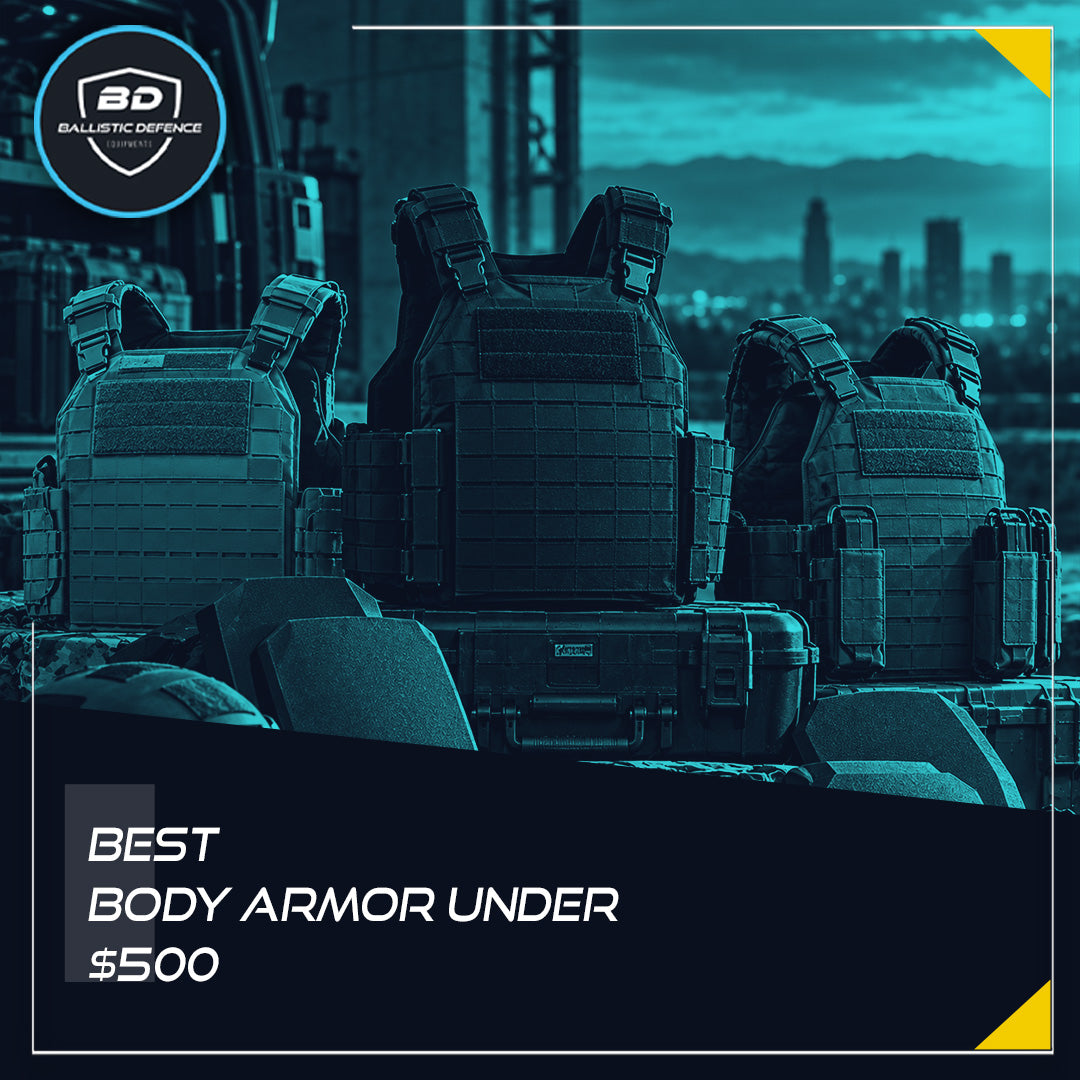
You do not need a four-figure budget to stand behind certified protection, and the best body armor under $500 proves that real, NIJ-rated ballistics are within reach of nearly every serious buyer in 2026. The trick is knowing where your dollars buy genuine stopping power and where they only buy branding. This guide shows you exactly how to assemble a trustworthy setup for under five hundred dollars — which levels are realistic at this price, which materials to prioritize, and which corners you should never cut.
What $500 Realistically Buys in 2026
Under $500 you are firmly in the territory of certified soft armor and entry-level hard plates. You can buy a quality Level IIIA concealable vest outright, a pair of standalone Level IIIA hard plates, or a single Level III rifle plate paired with a basic carrier. What you generally cannot do at this budget is kit out a full Level IV ceramic rifle loadout with side plates — that requires stepping up. The good news is that for the overwhelming majority of civilian and off-duty threats, a sub-$500 build delivers the protection that actually matters.
Understand the Levels Before You Spend
Price scales with the threat an armor defeats. Under NIJ 0101.07, handgun-rated armor is HG1 (9mm, .357 Magnum) and HG2 (.357 SIG, .44 Magnum); rifle-rated armor is RF1 (5.56 M193, 7.62x51 M80, 7.62x39), RF2 (adds 5.56 M855), and RF3 (.30-06 M2 AP). On older 0101.06 labels you will see IIA, II, IIIA for soft armor and III, IV for rifle plates. The cheapest certified protection is soft IIIA; the most expensive is RF3/Level IV armor-piercing-rated ceramic. Knowing where your threat sits keeps you from overpaying — or underbuying.
Best Value Pick: Level IIIA Soft Armor
Dollar for dollar, a certified Level IIIA concealable vest is the smartest buy under $500. The Preis Level IIIA Concealable Armor Vest stops the full spectrum of common handgun calibers — 9mm, .40 S&W, .45 ACP, .357 Magnum, and .44 Magnum — while adding knife- and spike-resistance that pure ballistic panels lack. It weighs only a few pounds, hides under a shirt, and covers the overwhelming majority of real-world civilian encounters, which statistically involve handguns, not rifles.
Lightweight Rifle Protection on a Budget
If your threat model includes rifles, you can still stay near budget with UHMWPE hard plates. A Bedrock Level IIIA Multi-Curve Plate weighs just 1.21 lb and offers rigid, concealable-profile handgun protection, while the Bedrock Level III Multi-Curve Plate at 4.74 lb is rated to stop common 5.56 and 7.62 rifle rounds. Pair a single rifle plate with an affordable carrier and you have front-of-chest rifle coverage for well under $500.
Don't Forget the Carrier
Plates are useless loose in a drawer. A lightweight, well-ventilated carrier such as the CEBE 2.2 Lightweight MOLLE Plate Carrier holds standard 10x12 plates, distributes weight across the shoulders, and still leaves MOLLE real estate for a magazine or medical pouch. At this price point, a minimalist carrier is exactly right — you are spending your money on ballistics, not on features you will never use.
Materials: Where Your Money Goes
Three materials dominate the budget space. Aramid (Kevlar-family) is the backbone of most soft IIIA vests — flexible, proven, and reasonably priced. UHMWPE (ultra-high-molecular-weight polyethylene) gives you the lightest rifle plates and the best floating-in-water bonus, though it struggles against steel-core rounds. Ceramic composites defeat armor-piercing threats but push you past $500 for a full set. Avoid cheap steel plates marketed as "budget rifle armor" unless you fully understand the spalling and weight tradeoffs.
Budget Body Armor Comparison
| Option | NIJ Rating | Stops | Weight | Material | Price Tier |
|---|---|---|---|---|---|
| Soft concealable vest | IIIA / HG2 | Handgun up to .44 Mag | 3–6 lb | Aramid | $ |
| Level IIIA hard plate | IIIA / HG2 | Handgun, rigid profile | ~1.2 lb | UHMWPE | $ |
| Level III rifle plate | III / RF1 | 5.56, 7.62x39/51 | ~4.7 lb | UHMWPE | $$ |
| Level IV plate | IV / RF3 | .30-06 M2 AP | ~5.8 lb | Ceramic | $$$ (over budget) |
The Mistakes That Waste a Budget
The fastest way to blow $500 is to buy uncertified "armor" from a marketplace with no NIJ listing, no manufacturer traceability, and photoshopped test footage. Always verify certification, buy from a reputable supplier, and confirm the plate is standalone if you intend to run it without a soft backer. Overbuying is the other trap — paying for RF3 ceramic when your realistic threat is a concealed handgun means you spent triple and gained nothing for your actual risk profile.
Smart Ways to Stretch Your Dollars
Buy the ballistics first and the accessories later. A certified IIIA vest or a single rifle plate in a minimalist carrier covers your vitals today; pouches, belts, and side plates can be added over time. Watch for package deals that bundle plates and carriers, which often beat buying separately. Our armor package collection is built around this logic, and the full body armor collection lets you filter by level and price so you never overpay.
Match the Build to Your Life
A suburban homeowner, an off-duty professional, and a rural rancher face very different threats, and each can build smartly under $500. For deeper cost analysis, read our breakdown of how much good body armor costs in 2026, and if you are brand new to the category, start with the complete beginner's guide to buying body armor in the USA. To decide between soft and hard protection within your budget, the 2026 buyer's guide to soft armor vs hard plates lays out the tradeoffs clearly.
Frequently Asked Questions About Best Body Armor Under $500
Can you get certified body armor for under $500?
Yes. A certified Level IIIA concealable vest, a pair of Level IIIA hard plates, or a single Level III rifle plate with a basic carrier all fit comfortably under $500 in 2026. The key is buying genuinely NIJ-certified products, not uncertified imitations.
What is the best budget body armor for home defense?
For most home defenders, a Level III or IIIA hard plate in a lightweight carrier offers the best balance of rifle or handgun protection and price. If your threat is primarily handguns, a soft IIIA vest is an even more affordable and comfortable choice.
Is cheap body armor safe?
Affordable armor is safe only if it is NIJ-certified and bought from a reputable supplier. Price alone is not the warning sign — the absence of certification, traceability, and independent testing is. Never trust uncertified plates regardless of how low the price.
Can I stop rifle rounds for under $500?
Yes, with a single Level III UHMWPE plate in an affordable carrier you can stop common 5.56 and 7.62 rifle rounds. Full Level IV armor-piercing protection with side plates typically pushes past the $500 budget.
Should I buy soft armor or a plate first on a tight budget?
Buy for your most likely threat first. Civilian encounters overwhelmingly involve handguns, so a certified soft IIIA vest is often the best first purchase. Add rifle plates later as budget allows if your threat model warrants them.
The Bottom Line
Great protection is not a luxury purchase. Spend your budget on certified ballistics — start with the Preis Level IIIA Concealable Vest or a Bedrock Level III rifle plate — and add accessories over time. Browse value-focused options in our armor packages and build a sub-$500 setup you can genuinely rely on.