
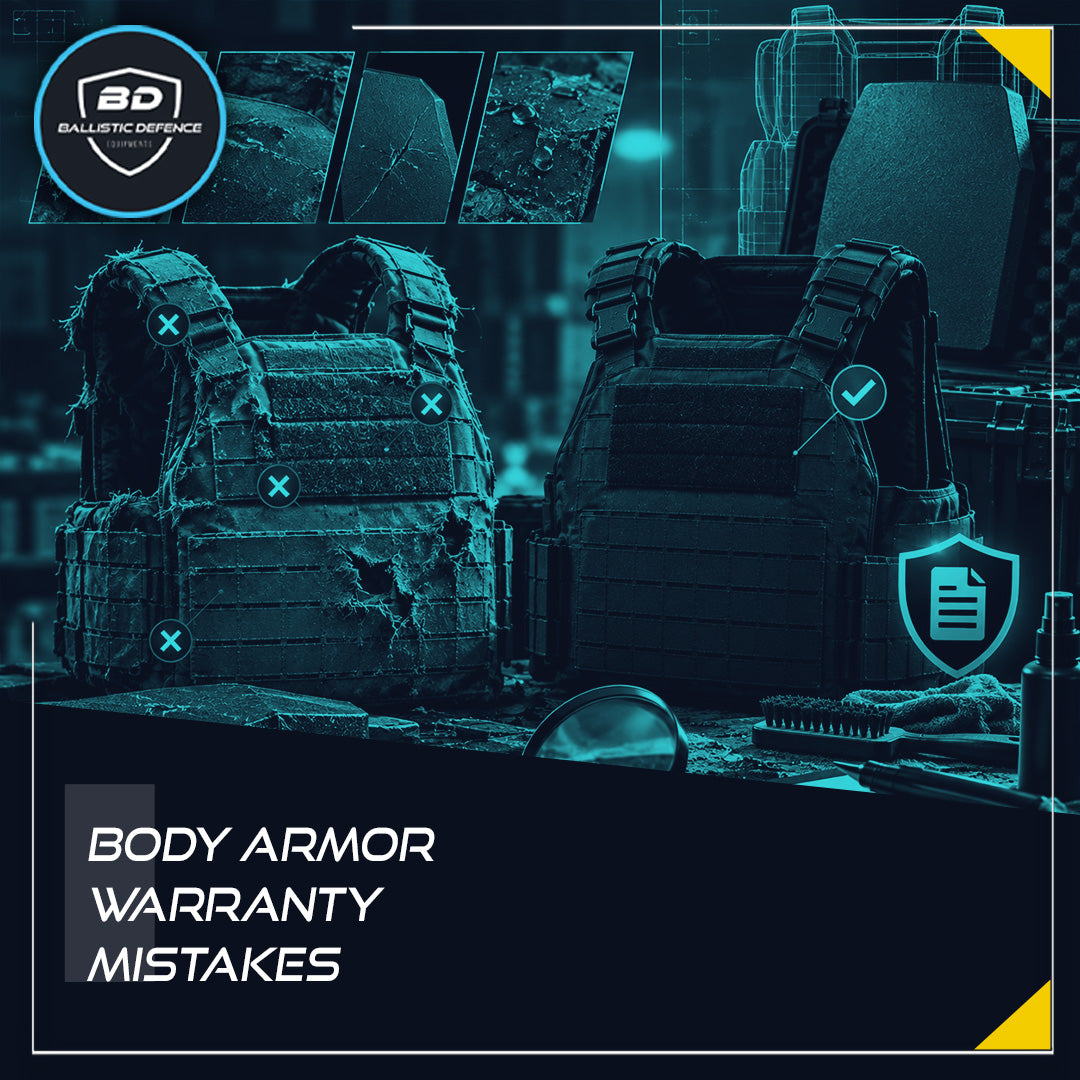
The most expensive body armor is the armor that fails when you need it - which is why understanding body armor warranty and buying mistakes is as important as choosing the right threat level. A warranty tells you what a manufacturer actually stands behind, and the common buying errors below are the ones that cost people money, protection, and sometimes certification they thought they had. This guide walks through what warranties really cover, the pitfalls that trip up buyers in 2026, and how to spend confidently the first time.
Why the Warranty Is Part of the Protection
Ballistic armor has a finite service life. Soft aramid panels degrade over roughly five years; hard plates carry longer ratings but are still dated. A manufacturer's warranty signals how long they expect the product to perform and what defects they will remedy. A serious armor warranty covers delamination, stitching failure, and manufacturing defects within the rated life. It does not promise the armor survives being shot - no warranty does - but it does tell you the maker builds to a standard they will back financially.
Warranty vs. Rated Service Life
These two numbers are often confused. The rated service life is how long the ballistic material is certified to perform - typically five years for soft armor and five to ten for hard plates, printed on the label. The warranty is the manufacturer's defect coverage, which may be shorter, equal, or occasionally longer than the service life. Always read both. Our guide on body armor expiration, shelf life, and replacement explains how to track dates and when to retire a panel.
Mistake #1: Buying Uncertified Armor
The single costliest error is buying "armor" with no NIJ certification. Under NIJ 0101.07, legitimate armor is tested to defeat specified threats - HG1/HG2 for handguns, RF1/RF2/RF3 for rifles - and labeled accordingly. Uncertified plates from anonymous marketplace sellers have no independent verification, no traceable lot, and frequently no real warranty. A certified Bedrock Level IV Multi-Curve Plate, rated to stop .30-06 M2 armor-piercing rounds (RF3), is backed by testing you can verify - the uncertified bargain is not.
Mistake #2: Ignoring Standalone vs. In-Conjunction Ratings
Some plates are certified only in conjunction with a soft armor backer, not standalone. Buyers who run an ICW plate alone unknowingly reduce their protection. Always confirm whether a plate is rated standalone. If you want simplicity, choose plates clearly marked standalone and pair soft armor only when you want added handgun coverage and trauma mitigation.
Mistake #3: Overlooking Backface Deformation and Trauma
A plate can stop a round and still transmit dangerous blunt force behind it. Backface deformation is measured during NIJ testing, but real-world trauma depends on fit and backing. Pairing a rifle plate with a soft trauma pad or a certified soft backer reduces injury. Don't assume "it stopped the bullet" means "no injury" - build your system to manage both penetration and trauma.
Mistake #4: Buying the Wrong Level for the Threat
Overbuying wastes money; underbuying risks your life. A buyer facing a realistic handgun threat does not need RF3 ceramic - a certified Preis Level IIIA Concealable Vest is lighter, cheaper, and correct. Conversely, someone expecting rifle fire gains nothing from soft armor alone. Match the armor to the round: IIIA/HG2 for handguns, III/RF1 and up for rifles. Our price vs protection guide helps you right-size the spend.