
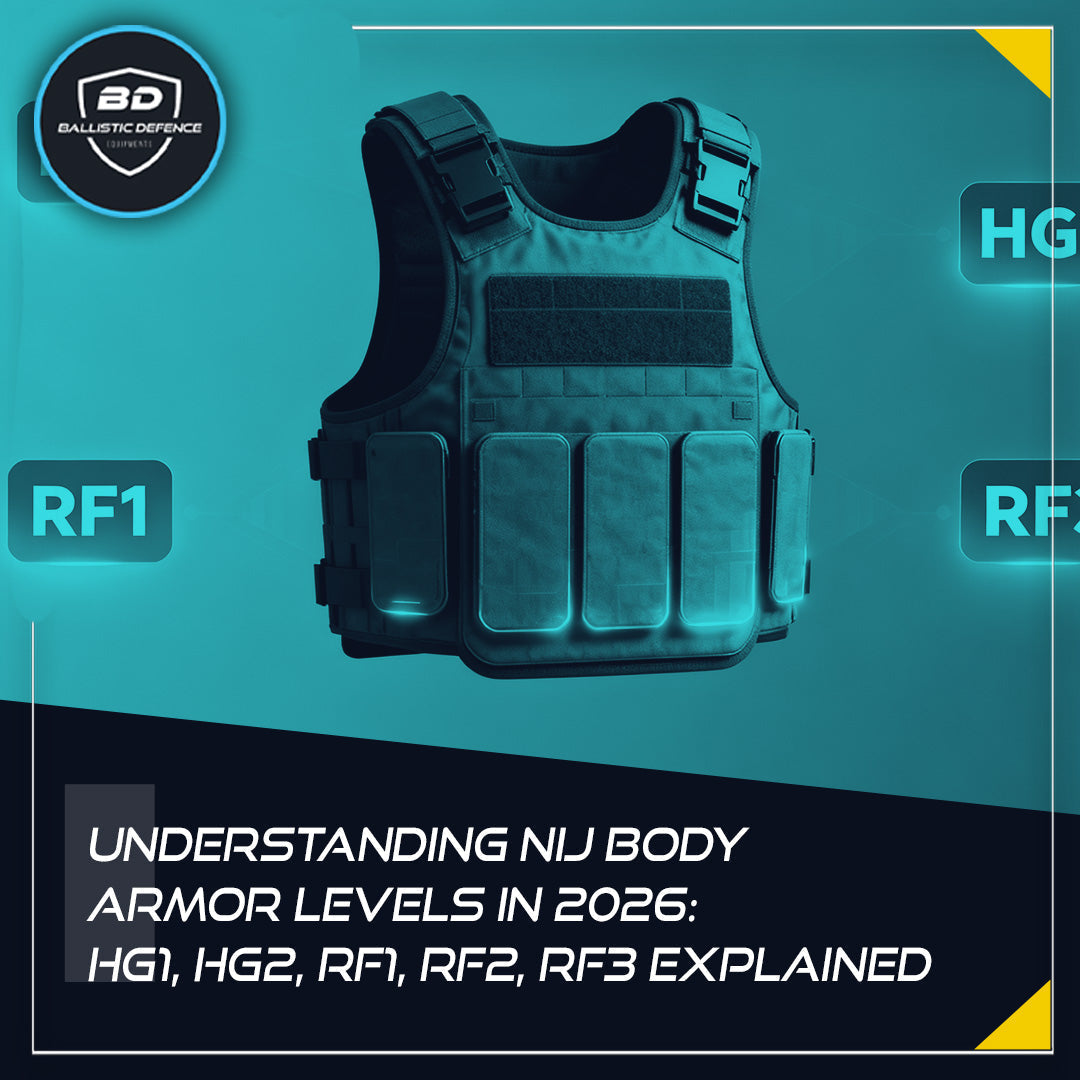
Body armor in 2026 is no longer just about seeing “Level IIIA” or “Level IV” on a product page. Buyers in the U.S. market now face a newer NIJ classification system built around HG1, HG2, RF1, RF2, and RF3, making it more important than ever to understand how modern body armor levels work and how they compare to older standards.
Many brands and product listings still use legacy labels such as Level IIIA, Level III, and Level IV, while the industry continues shifting toward updated handgun and rifle threat categories. That is why understanding body armor classifications is essential for anyone trying to choose the right protection level, compare armor types, and make a more informed buying decision.
Understanding NIJ Body Armor Levels in 2026
The updated NIJ framework uses a clearer language for modern ballistic protection. Instead of relying only on older numeric labels, it separates threats into two categories: HG for handgun protection and RF for rifle protection. This gives buyers a more practical way to evaluate body armor based on realistic use rather than simply assuming that a higher number is always the better choice.
For many buyers, this change is important because body armor is now easier to compare according to threat type, wearability, and intended use. A buyer looking for discreet everyday protection will not approach armor the same way as someone building a rifle-rated tactical setup. The updated NIJ language helps make that difference clearer from the beginning.
NIJ Body Armor Levels Explained: HG1, HG2, RF1, RF2, and RF3
When buyers search for NIJ body armor levels, they are usually trying to understand how the new system compares with the old one. In general terms, HG1 replaces older lower handgun-focused categories, HG2 broadly aligns with what many buyers know as Level IIIA, RF1 broadly aligns with Level III, and RF3 broadly aligns with Level IV. RF2 adds an important middle step between standard rifle-rated armor and the highest-level rifle protection.
This makes modern body armor classifications more useful because buyers can now identify not only the strength of the protection but also the type of threat the armor is built to address. That matters for selecting the right system, whether the need is low-profile handgun protection or a hard armor configuration for more demanding rifle threats.
HG1 Body Armor Level Explained
HG1 is the entry-level handgun classification in the newer NIJ structure. It is designed for buyers who want a lighter and more concealable form of ballistic protection, especially in situations where mobility and comfort matter more than maximum coverage. In body armor discussions, HG1 represents a lower-profile solution for users who are focused on handgun threats rather than rifle threats.
For buyers comparing modern body armor levels, HG1 is useful to understand because it defines the lower end of handgun-rated ballistic protection. It is a category built around practicality, easier wear, and reduced bulk, which can matter greatly in daily use.
HG2 Body Armor Level Explained
HG2 is the higher handgun-rated classification and is the modern equivalent of what many buyers still recognize as Level IIIA. This is one of the most important body armor levels for users who want serious handgun protection while maintaining a more wearable and practical setup than rifle-rated hard plates.
For shoppers researching handgun-focused body armor, Ballistic Defence offers relevant options through the Body Armor collection. A product such as the ZIRH Level IIIA Hard Body Armor Plate – 1.21 lbs fits directly into this conversation and gives buyers a useful reference point when comparing lighter ballistic protection solutions.
RF1 Body Armor Level Explained
RF1 is the base rifle-rated classification in the updated NIJ structure and broadly replaces what many buyers previously knew as Level III. This is the point at which body armor moves from handgun-focused protection into rifle-rated hard armor intended for more demanding ballistic threats.
For buyers who need rifle-rated body armor without immediately stepping into the heaviest armor category, RF1 is often the logical starting point. On Ballistic Defence, the ZIRH Level III Hard Body Armor Plate – 2.64 lbs is a highly relevant product for readers comparing this class of modern rifle-rated body armor.
RF2 Body Armor Level Explained
RF2 is one of the most useful additions to the new NIJ body armor system because it creates a more practical middle category for rifle protection. Instead of forcing buyers to think only in terms of standard rifle armor or maximum rifle armor, RF2 offers a more nuanced way to compare threats and product options.
This matters because modern body armor buyers often face more varied threat profiles than older classification systems reflected. RF2 helps bridge that gap and gives buyers a more accurate framework for evaluating rifle-rated hard armor in today’s market.
RF3 Body Armor Level Explained
RF3 is the highest rifle-rated category in the newer NIJ body armor structure and broadly replaces the older Level IV classification. This is the level typically associated with maximum ballistic resistance for the most demanding rifle threats covered by the standard.
For readers researching high-end rifle-rated body armor, the ZIRH Level IV Hard Body Armor Plate – 6.4 lbs is one of the most relevant products on Ballistic Defence. It helps connect the article topic to a real product example and gives buyers a direct point of reference when comparing top-tier hard armor options.
Soft Body Armor vs Hard Body Armor
Understanding body armor levels also means understanding the difference between soft armor and hard armor. In most buying scenarios, HG1 and HG2 are more closely associated with softer, lighter, and more concealable protection systems, while RF1, RF2, and RF3 are associated with hard armor plates built for rifle threats.
This distinction is important because not every buyer needs the same type of body armor. A concealed vest or lightweight handgun-rated plate may be the better fit for daily wear, lower-profile use, or long-duration comfort. Hard armor plates, on the other hand, are more appropriate for overt tactical use and higher-threat environments where rifle-rated protection is required.
How to Choose the Right Body Armor Level
The right body armor level depends on your real-world use case. If your priority is handgun protection, concealment, and easier long-term wear, a handgun-rated category such as HG1 or HG2 may be the better place to start. If your concern includes rifle threats, hard armor in the RF categories becomes the more appropriate direction.
That is why choosing body armor should never be based only on the highest rating available. Buyers should also consider weight, mobility, comfort, duration of wear, and whether the setup needs to remain discreet or can be part of an overt tactical configuration.
Body Armor Setup: Plates, Carriers, and Complete Systems
For many buyers, body armor is not just about the plate itself. The complete setup also matters. Rifle-rated hard armor is often most effective when paired with the right carrier, especially for users who need modularity, equipment mounting, and better field functionality.
On Ballistic Defence, a product such as the ARARAT 2.1 Rapid Plate Carrier Vest gives buyers a relevant way to turn hard armor plates into a more complete protective system. This is particularly important for readers researching rifle-rated body armor and wanting to understand how a full setup works in practice.
Body Armor Levels and Legacy Labels
One of the biggest sources of confusion in the current market is that many body armor products still use legacy labels like Level IIIA, Level III, and Level IV. That does not mean those products are outdated. In many cases, it simply means the market is still transitioning between naming systems while buyers continue to search using older, familiar terms.
For that reason, understanding both the old labels and the new NIJ body armor levels is extremely useful. Buyers who know how legacy terms roughly align with HG and RF categories can compare modern products more confidently and avoid confusion when browsing different brands or product collections.
Understanding NIJ Body Armor Levels for Better Buying Decisions
Understanding NIJ body armor levels in 2026 is not just about memorizing abbreviations. It is about understanding the real difference between handgun-rated and rifle-rated protection, the trade-off between mobility and protection, and the way body armor should match your actual threat environment.
For some buyers, that may mean a lighter handgun-focused option from the Body Armor collection. For others, it may mean stepping up to rifle-rated hard armor such as the ZIRH Level III Hard Body Armor Plate – 2.64 lbs or the ZIRH Level IV Hard Body Armor Plate – 6.4 lbs paired with the ARARAT 2.1 Rapid Plate Carrier Vest. The better choice always comes down to realistic needs, not just the highest number on the label.
Frequently Asked Questions About NIJ Body Armor Levels
What do HG and RF mean in NIJ body armor levels?
HG stands for handgun protection, while RF stands for rifle protection. These terms help buyers understand whether the body armor is designed for handgun threats or rifle threats.
Is Level IIIA the same as HG2?
In broad market understanding, Level IIIA aligns closely with HG2. Many brands still use the older Level IIIA label while buyers gradually become more familiar with the new NIJ terminology.
What is the difference between RF1 and RF3 body armor?
RF1 is a lower rifle-rated category that broadly aligns with older Level III, while RF3 is the highest rifle-rated category and broadly aligns with older Level IV. RF3 is intended for more demanding rifle-threat environments.
Should I choose soft body armor or hard body armor?
Soft body armor is generally better for lighter, more concealable handgun-focused protection, while hard body armor is more suitable for rifle threats and overt tactical setups. The right choice depends on your threat environment and how you plan to wear the armor.
What body armor should I choose for a complete tactical setup?
If you need rifle-rated protection and modular gear placement, pairing hard armor plates with a carrier such as the ARARAT 2.1 Rapid Plate Carrier Vest creates a more complete body armor system.