
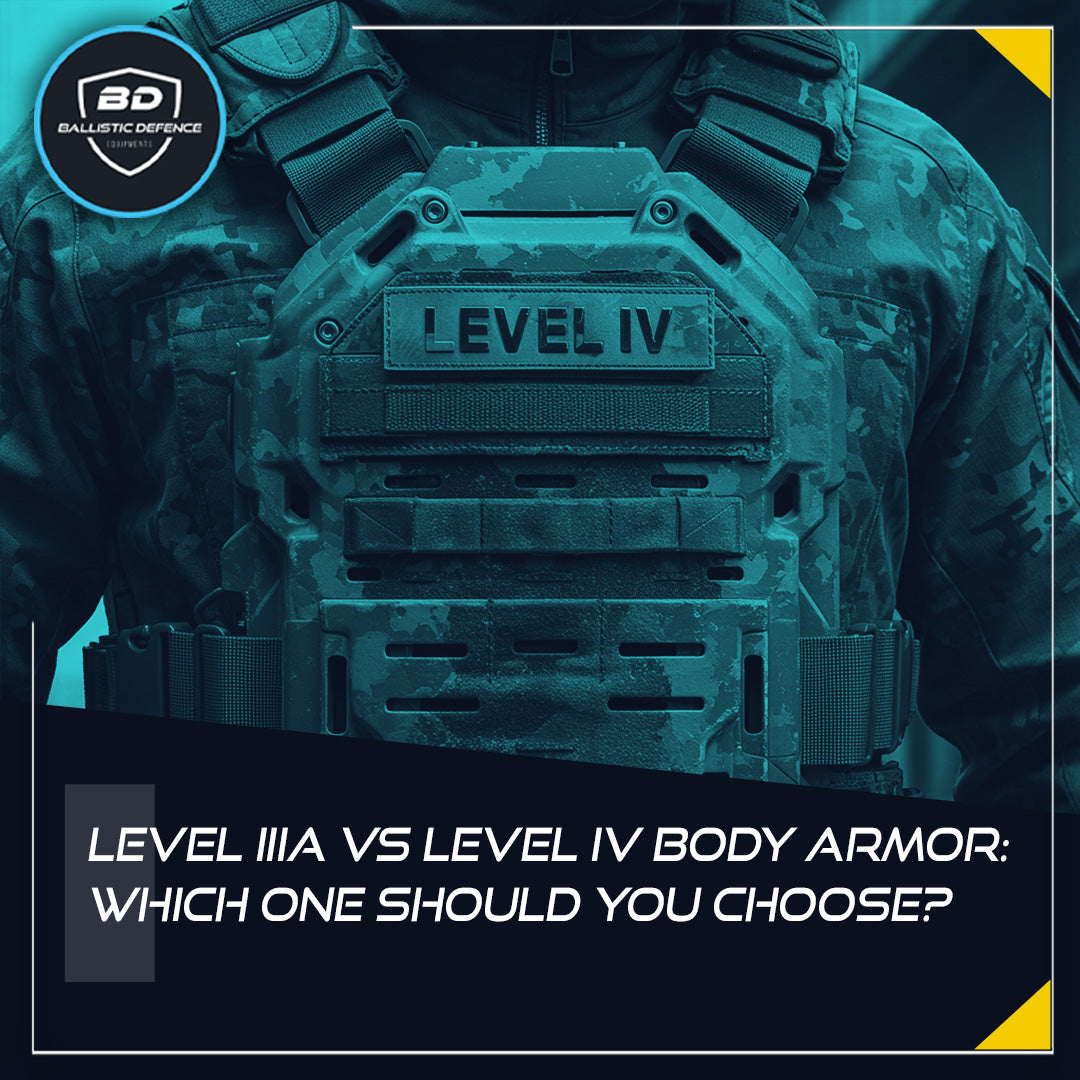
When shopping for body armor, one of the most common questions buyers ask is whether Level IIIA or Level IV is the better choice. At first glance, it may seem obvious to assume that Level IV is always the smarter option because it offers a higher level of ballistic protection. In reality, the right choice depends on your threat environment, how you plan to wear the armor, how long you expect to wear it, and how much weight and mobility matter in your daily use.
For many buyers, this decision is not simply about choosing the strongest armor available. It is about choosing the armor that realistically matches the risks you may face. A concealable solution built for handgun threats serves a very different purpose than a hard armor plate designed for high-level rifle protection. Understanding that difference is the key to making the right decision.
What Does Level IIIA Mean?
Level IIIA body armor is generally associated with protection against common handgun threats. It is widely chosen by buyers who need a balance of protection, comfort, and lower-profile wearability. In many cases, Level IIIA armor is used in soft armor systems or lighter hard armor solutions intended for users who prioritize everyday mobility and reduced bulk.
This level is a practical choice for users who are primarily concerned with handgun threats rather than rifle rounds. It is especially relevant for people who want lighter gear, easier concealment, and more comfort during extended wear. That is why Level IIIA remains one of the most popular categories for everyday protective use.
What Does Level IV Mean?
Level IV body armor is built for significantly higher protection and is associated with rifle-rated ballistic resistance. This category is intended for users who may face more severe threats and need hard armor capable of handling much more demanding ballistic impacts.
Because of that higher protection threshold, Level IV armor is typically heavier, more rigid, and less discreet than Level IIIA options. It is usually chosen for tactical, operational, or high-risk applications where rifle threats are the primary concern and where maximum ballistic protection matters more than concealment or lightweight comfort.
The Main Difference Between Level IIIA and Level IV
The biggest difference is simple: Level IIIA is handgun-focused, while Level IV is rifle-focused. This means the two categories are not direct competitors in the way many first-time buyers assume. They are built for different threat levels and different use cases.
If your concern is everyday handgun protection, low visibility, and lighter wear, Level IIIA may be the better fit. If your concern includes more serious rifle threats and you are willing to accept more weight and bulk in exchange for stronger ballistic resistance, Level IV becomes the more appropriate option.
When Level IIIA Makes More Sense
Level IIIA is often the better choice when comfort, mobility, and ease of wear are major priorities. Buyers who need armor they can wear for longer periods, carry more comfortably, or integrate into lower-profile setups often find that this level provides the right balance.
On Ballistic Defence, the PREIS Concealable Soft Body Armor Vest is a strong example of a protective solution designed around discreet wear and practical daily use. For buyers who want a hard plate option in the same broader protection class, the ZIRH Level IIIA Hard Body Armor Plate – 1.21 lbs offers a lightweight option that supports mobility while staying in the handgun-focused protection range.
When Level IV Makes More Sense
Level IV is the better choice when the expected threat environment is more serious and rifle protection is a realistic requirement. In these situations, lighter armor may no longer be enough, and the priority shifts toward maximum stopping capability rather than concealment or extended all-day comfort.
On Ballistic Defence, the ZIRH Level IV Hard Body Armor Plate – 6.4 lbs represents this category well. It is built for buyers who need the highest level of ballistic protection offered in the product line and who understand that stronger protection usually comes with additional weight and a more overt setup.
Weight and Comfort Matter More Than Many Buyers Expect
One of the biggest mistakes buyers make is focusing only on the protection label without thinking enough about weight, fatigue, and real-world wearability. Armor that feels manageable for a few minutes may feel completely different after hours of movement, standing, training, or carrying additional equipment.
This is where Level IIIA and Level IV become very different buying decisions. A lighter concealable vest or lightweight IIIA plate is often easier to live with on a regular basis. A Level IV plate may offer a much higher degree of protection, but it also demands more from the user in terms of endurance, mobility, and overall load management.
Concealment vs Overt Protection
Another important factor is whether you need a low-profile setup or an overt tactical configuration. Level IIIA is far more compatible with concealable and lower-visibility armor systems, making it appealing for buyers who do not want a bulky external setup.
Level IV, on the other hand, is generally part of a more visible plate carrier configuration. For users building that type of system, pairing hard armor plates with a dedicated carrier such as the ARARAT 2.1 Rapid Plate Carrier Vest makes more sense than thinking of the plate alone. The plate and the carrier work together as a complete protective platform.
Which One Is Better for Civilian Buyers?
For many civilian buyers, Level IIIA is often the more practical starting point because it is easier to wear, lighter to manage, and better suited to lower-profile protection needs. It covers a common buying scenario: wanting meaningful protection without immediately moving into a heavier tactical setup.
That said, some civilian buyers specifically want rifle-rated protection for preparedness, range-related use, or higher-risk circumstances. In that case, Level IV may be the more appropriate option. The key is not whether the buyer is civilian or professional. The real question is what threat level the armor needs to address.
Which One Should You Choose?
You should choose Level IIIA if your priority is handgun protection, reduced weight, easier concealment, and better long-term wearability. You should choose Level IV if your priority is maximum ballistic protection against more severe rifle threats and you are comfortable with the additional weight and structure that come with hard armor plates.
In other words, the better option is the one that matches your realistic needs. A higher rating is not automatically the smarter buy if it makes the system too heavy, too bulky, or less suitable for how you actually plan to use it.
Final Thoughts
Level IIIA and Level IV body armor serve very different purposes, and neither one is universally better in every situation. Level IIIA offers a lighter, more wearable solution for handgun-focused protection, while Level IV provides a much higher level of defense for users who need rifle-rated armor and are prepared for the trade-offs in weight and bulk.
If you are deciding between the two, start with the threat first, then think about comfort, concealment, duration of wear, and how complete your setup needs to be. On Ballistic Defence, that may mean choosing the PREIS Concealable Soft Body Armor Vest or the ZIRH Level IIIA Hard Body Armor Plate – 1.21 lbs for lighter protection needs, or stepping up to the ZIRH Level IV Hard Body Armor Plate – 6.4 lbs with the ARARAT 2.1 Rapid Plate Carrier Vest for a more robust rifle-rated armor setup.