
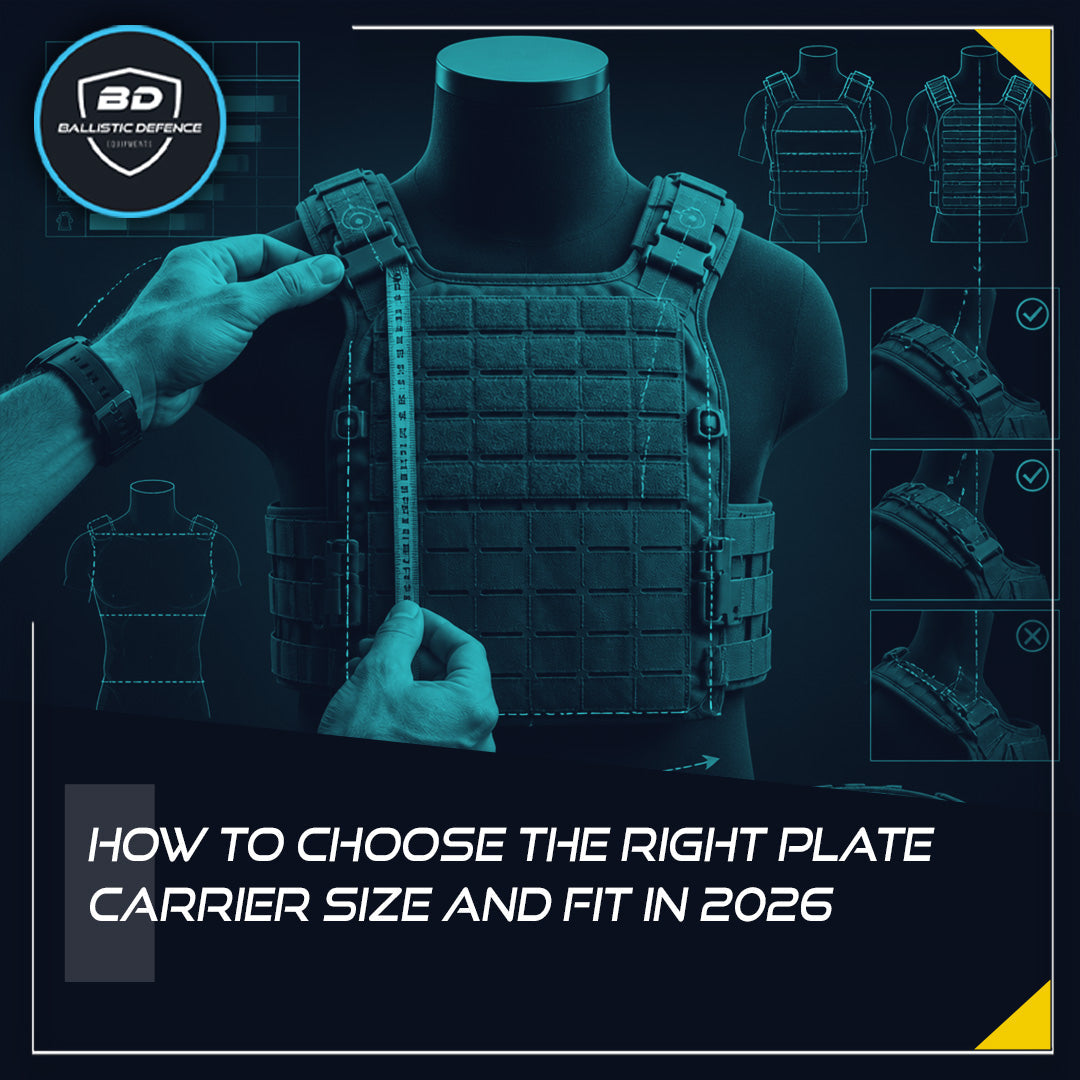
Choosing the right plate carrier size and fit is one of the most overlooked yet critical parts of building a protective setup. A plate carrier that fits poorly can leave vital areas exposed, restrict movement, or cause discomfort that discourages proper wear, all of which reduce the protection your armor is meant to provide.
This guide walks you through how to size a plate carrier correctly, what fit factors matter most, and how to ensure your armor actually protects you the way it should in 2026.
Why Plate Carrier Fit Matters So Much
Body armor only protects the areas it covers, which makes fit absolutely essential. A plate carrier that's too large can shift around and leave gaps, while one that's too small can ride up, restrict breathing, or fail to cover vital areas properly. Correct fit ensures the plates stay positioned over your chest and vital organs where they're needed most.
Beyond protection, fit also affects comfort and mobility. A well-fitted carrier moves with you, stays in place during activity, and remains comfortable enough to wear correctly for as long as needed.
Understanding Plate Size vs Carrier Size
It's important to understand that plate size and carrier size are related but distinct. The plate must be sized to cover your vital areas, while the carrier must be adjusted to hold that plate securely against your body. Getting both right is the key to proper protection.
When choosing plates for your carrier, consider options from the Body Armor collection and ensure the plate dimensions match both your body and your carrier's plate pocket.
How to Measure for the Right Plate Size
To size your plates correctly, you generally want coverage of your vital torso area, from roughly the top of your sternum down to above your navel, with adequate width to protect the center mass of your chest. Plates that are too small leave critical areas exposed, while oversized plates can restrict movement.
The goal is balanced coverage: enough to protect vital areas without unnecessarily limiting your range of motion. This is why measuring carefully before choosing plates is so important.
Adjusting Your Carrier for a Secure Fit
Once you have the right plates, the carrier itself must be adjusted properly. Shoulder straps and side cummerbund adjustments should hold the carrier snugly without being so tight that they restrict breathing or movement. The plates should sit flat against your body and stay in position when you move.
A carrier like the ARARAT 2.1 Rapid Plate Carrier Vest offers adjustability that helps you dial in a secure, comfortable fit while keeping the plates positioned correctly over your vital areas.
Matching Plates to Your Carrier and Threat Level
Different plates have different weights and dimensions, which affects both fit and comfort. A lighter plate like the ZIRH Level IIIA Hard Body Armor Plate – 1.21 lbs is easier to manage for all-day wear, while rifle-rated plates such as the ZIRH Level III Hard Body Armor Plate – 2.64 lbs add weight but provide stronger protection.
For maximum rifle protection, the ZIRH Level IV Hard Body Armor Plate – 6.4 lbs offers top-tier defense. Whichever you choose, ensure the plate fits your carrier's pockets and your body correctly.
Common Fit Mistakes to Avoid
Several common mistakes can undermine an otherwise good setup: wearing the carrier too low so it fails to cover the chest, over-tightening to the point of restricting movement, choosing plates that are too small, or neglecting to adjust the carrier after adding gear. Each of these reduces protection or comfort.
Taking the time to adjust your carrier correctly and verify plate positioning will help you avoid these issues and get the full protective benefit of your armor.
Checking Your Fit Before Real-World Use
Before relying on your setup, test the fit by moving, bending, and reaching to confirm the plates stay in position and the carrier remains comfortable. The armor should protect your vital areas throughout a full range of motion without shifting or causing discomfort.
This kind of practical check ensures your carrier and plates work together as intended, giving you confidence that your protection is properly positioned when it matters.
Getting the Right Fit in 2026
The right plate carrier size and fit comes down to matching your plates to your body, adjusting the carrier for a secure and comfortable hold, and verifying that vital areas stay protected through movement. A properly fitted setup maximizes both protection and wearability.
By taking sizing and fit seriously, you ensure your investment in body armor actually delivers the protection it's designed to provide, exactly where and when you need it.
Frequently Asked Questions About Plate Carrier Fit
How should a plate carrier fit?
A plate carrier should hold the plates snugly against your body, cover your vital chest area, and allow a full range of motion without shifting or restricting movement.
What size plates do I need?
Plates should cover your vital torso area, roughly from the top of your sternum to above your navel, with enough width to protect your center mass while allowing movement.
Can a plate carrier be too tight?
Yes. An over-tightened carrier can restrict breathing and movement. It should be snug enough to hold plates in place but not so tight that it limits your mobility.
Does carrier fit affect protection?
Absolutely. A poorly fitted carrier can leave vital areas exposed or allow plates to shift out of position, reducing the protection your armor provides.
Should I check my fit after adding gear?
Yes. Adding pouches and gear can change how the carrier sits. Always re-check the fit after loading your setup to ensure the plates stay properly positioned.