
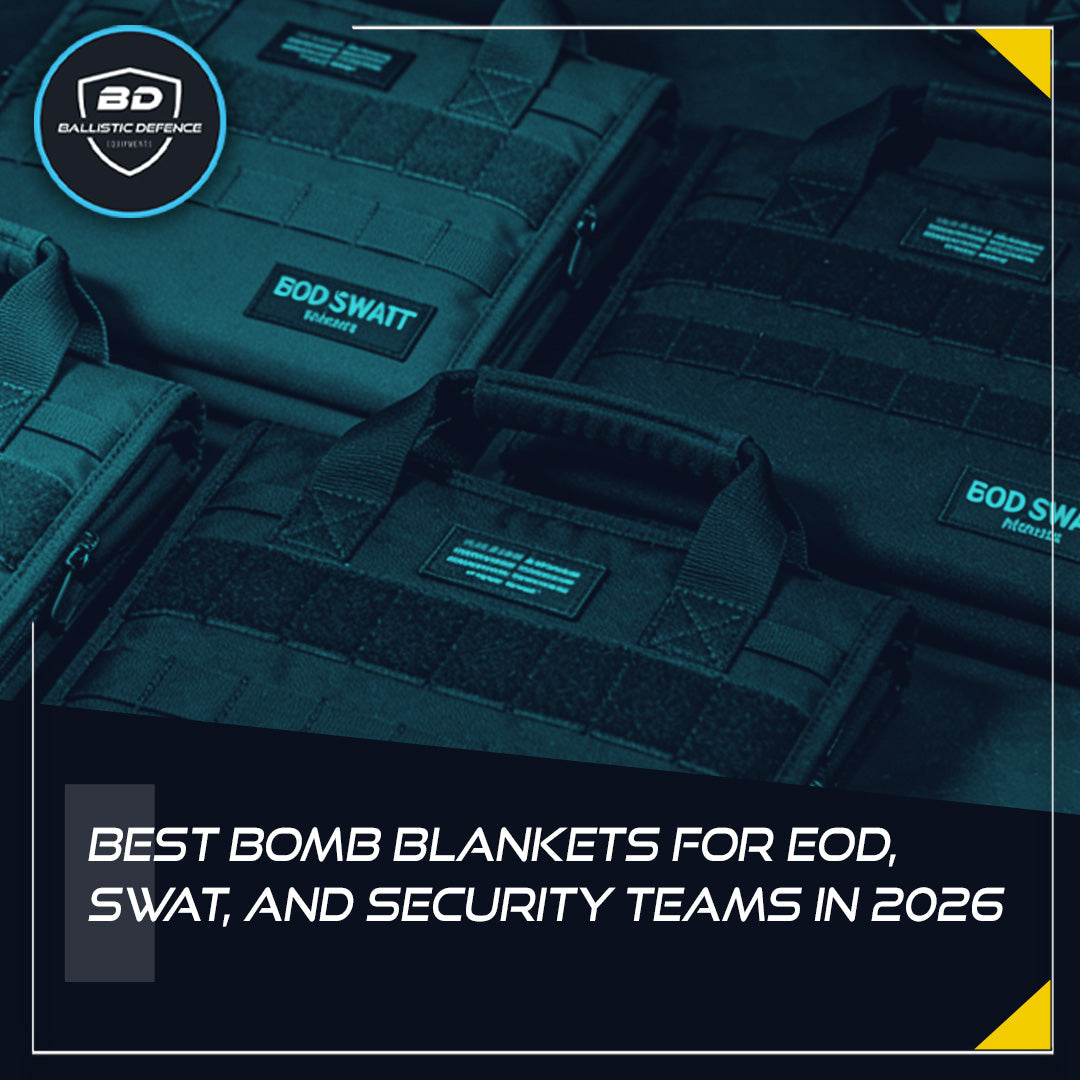
The best bomb blankets for EOD, SWAT, and security teams in 2026 combine reliable fragmentation and blast mitigation, practical deployment, and durability under demanding conditions. For specialized teams, a bomb blanket is a critical containment tool, and choosing the right one can directly affect how well an explosive threat is managed.
This guide explains what professional teams should look for in a bomb blanket, how these tools fit into a broader protective strategy, and how to evaluate them for real operational use.
Why EOD, SWAT, and Security Teams Use Bomb Blankets
EOD units, SWAT teams, and security professionals face explosive and fragmentation threats that ordinary protective gear isn't designed to address. A bomb blanket provides a way to contain or mitigate the effects of a suspected device, reducing the spread of fragments and helping limit blast damage to people and property nearby.
For these teams, a bomb blanket is part of a specialized response capability. It complements personal body armor rather than replacing it, addressing a specific category of threat that requires purpose-built equipment.
What Makes a Bomb Blanket Suitable for Professional Use
Professional-grade bomb blankets need to balance protective performance with practical deployment. Teams should look for appropriate ballistic and fragmentation ratings, durable construction, manageable weight for rapid deployment, and a design that allows the blanket to be positioned quickly and effectively in the field.
Because these tools are often deployed under time pressure, ease of handling matters as much as raw protective capability. The best options are built for real operational conditions, not just laboratory ratings.
Understanding Protection Ratings
Many bomb blankets are rated to ballistic standards such as NIJ Level IIIA, reflecting their ability to stop or slow fragmentation and certain ballistic threats. For professional teams, understanding these ratings helps ensure the blanket matches the threats they're likely to encounter.
Just as teams match body armor from the Body Armor collection to their threat environment, bomb blankets should be selected based on the specific fragmentation and blast risks involved in their operations.
Bomb Blankets as Part of a Complete Team Setup
For specialized teams, the bomb blanket works best alongside a full protective loadout. Personal body armor handles direct ballistic threats, while the bomb blanket addresses explosive containment. Together, they cover a broader range of operational scenarios.
Team members typically wear rifle-rated protection for personal defense. Pairing a carrier like the ARARAT 2.1 Rapid Plate Carrier Vest with plates such as the ZIRH Level III Hard Body Armor Plate – 2.64 lbs or the ZIRH Level IV Hard Body Armor Plate – 6.4 lbs ensures personnel are protected while a bomb blanket handles device containment.
Deployment Speed and Field Practicality
In real operations, how quickly and effectively a bomb blanket can be deployed is just as important as its protective rating. Teams should consider weight, packability, and how easily the blanket can be positioned over or around a threat under pressure.
A blanket that's too heavy or awkward to deploy quickly can hinder response in time-critical situations. The best options balance robust protection with the practicality teams need in the field.
Durability and Reliability Under Stress
Professional equipment must hold up to repeated use, transport, and demanding field conditions. A quality bomb blanket should maintain its protective integrity over time and withstand the wear that comes with operational deployment.
For EOD, SWAT, and security teams, reliability is non-negotiable. Equipment that fails under stress is worse than no equipment at all, which is why durability is a key selection criterion.
Matching the Blanket to Your Team's Mission
Different teams have different needs. An EOD unit, a SWAT team, and a facility security detail may each prioritize different aspects of a bomb blanket's performance. The best choice depends on your specific mission profile, threat environment, and operational requirements.
By assessing how and where the blanket will be used, teams can select a tool that genuinely supports their response capability rather than simply choosing the highest-rated option available.
Choosing the Best Bomb Blanket in 2026
The best bomb blanket for professional teams is the one that matches your threat environment, deploys quickly, holds up under demanding use, and integrates into your broader protective strategy. For EOD, SWAT, and security professionals, this is a specialized but important piece of equipment.
Combined with reliable personal body armor, a well-chosen bomb blanket strengthens a team's ability to respond to explosive threats safely and effectively, making it a valuable part of a complete operational loadout.
Frequently Asked Questions About Professional Bomb Blankets
What protection rating should a professional bomb blanket have?
Many professional bomb blankets are rated to standards such as NIJ Level IIIA. The right rating depends on the specific fragmentation and blast threats your team faces.
Do bomb blankets replace body armor for teams?
No. Bomb blankets handle explosive containment, while personal body armor protects team members from direct ballistic threats. Both are needed for a complete loadout.
What should teams prioritize when choosing a bomb blanket?
Teams should prioritize appropriate protection ratings, durable construction, manageable weight for rapid deployment, and practical field handling under pressure.
Why does deployment speed matter?
In time-critical situations, a bomb blanket must be positioned quickly. A blanket that's too heavy or awkward to deploy can slow response when it matters most.
How does a bomb blanket fit into a team's protective setup?
It works alongside personal body armor and plate carriers, addressing explosive containment while wearable armor protects against direct threats, covering a broader range of scenarios.