
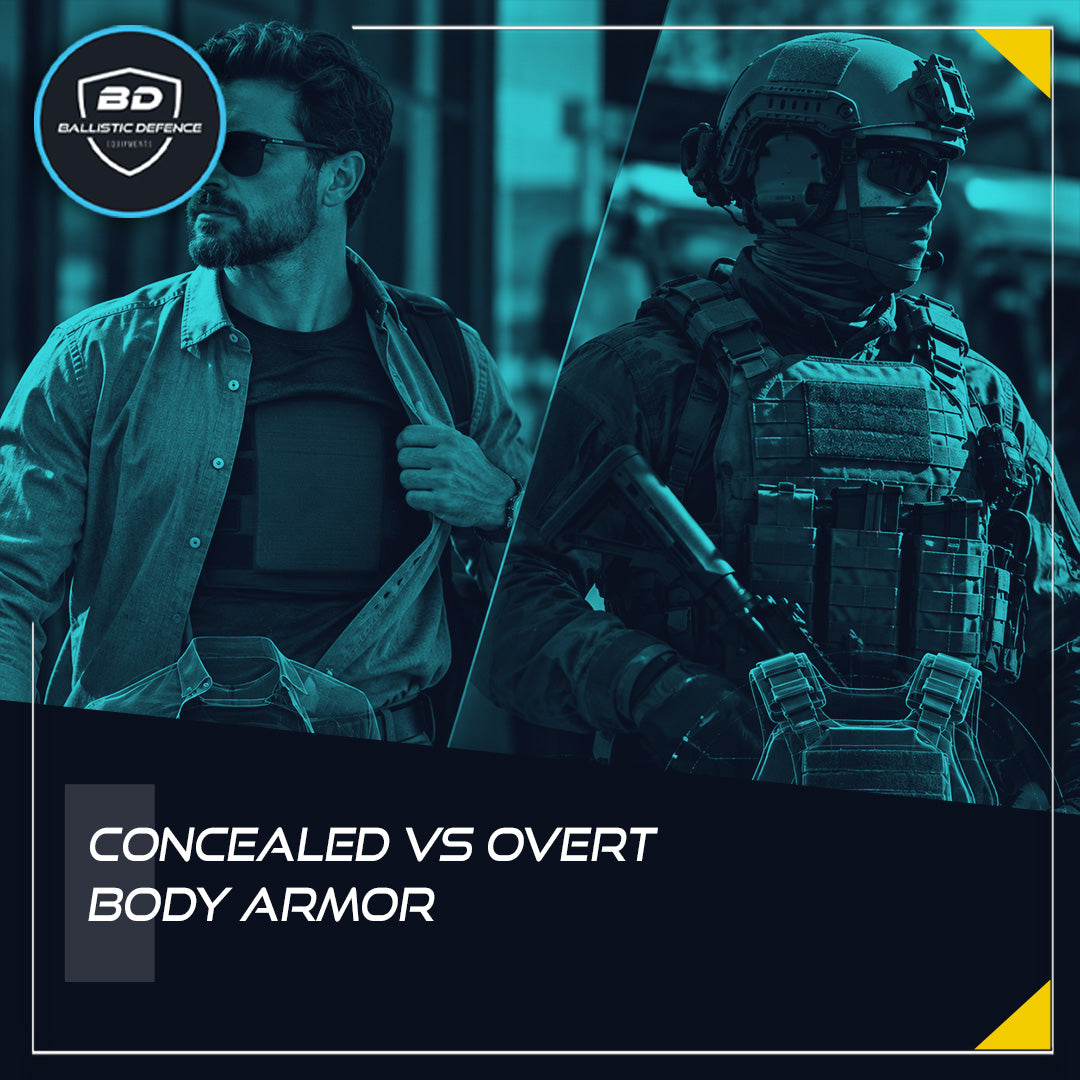
Choosing between concealed and overt body armor is the single most important decision you will make before you ever compare threat levels, and concealed vs overt body armor comes down to one honest question: do you need to disappear into a crowd, or do you need to stop rifle rounds? Both approaches use the same NIJ-certified ballistics under the hood, but they are built for completely different missions. This guide breaks down when concealable soft armor beats an overt plate carrier, what you sacrifice with each, and how to match your choice to a realistic threat model for the US market in 2026.
What "Concealed" and "Overt" Actually Mean
Concealed armor is designed to be worn under clothing, invisible to the people around you. It is almost always soft armor — flexible ballistic panels made from aramid (Kevlar-type) or UHMWPE that drape against the torso. Overt armor is worn over clothing in plain view, typically a plate carrier or external vest holding rigid hard armor plates. The difference is not just cosmetic. Concealment changes what threats you can realistically defeat, how much weight you carry, and how quickly you can respond.
The Threat Model Drives Everything
Under NIJ Standard 0101.07, soft body armor is rated to handgun threats: HG1 (9mm and .357 Magnum) and HG2 (the more demanding .357 SIG and .44 Magnum). It will not stop rifle rounds. Hard armor earns the rifle ratings — RF1 (7.62x51 M80 ball, 5.56 M193, 7.62x39), RF2 (adds 5.56 M855 "green tip"), and RF3 (.30-06 M2 AP armor-piercing). In the legacy 0101.06 language you still see on many labels, soft concealable armor is Level IIA, II, or IIIA, while hard plates are Level III and Level IV. If your realistic threat is a concealed handgun, soft armor is the right tool. If it is a rifle, you need plates — and plates are hard to hide.
When to Choose Concealed Soft Armor
Concealment wins when blending in is the mission. Plainclothes officers, executive protection details, security professionals, journalists, and private citizens who want everyday handgun protection without advertising it all benefit from low-profile soft armor. A quality concealable vest like the Preis Level IIIA Concealable Armor Vest rides under a dress shirt, adds knife- and spike-resistance that pure ballistic panels often lack, and weighs a fraction of a loaded plate carrier. For those who want protection built into outerwear, the Warden Armor Level IIIA Concealed Armored Jacket hides IIIA panels inside a normal-looking jacket — ideal when you cannot reshape your silhouette at all.
When to Choose Overt Plate Carriers
Overt armor wins when deterrence, capacity, and rifle protection matter more than discretion. Patrol officers, SWAT, armed security at fixed posts, and home defenders staging gear for a worst-case scenario all need hard plates and the real estate to carry magazines, medical, and comms. A modular carrier such as the CEBE 2.1 Rapid Quick-Release Plate Carrier accepts standard 10x12 plates and tears away instantly in an emergency. Load it with a Bedrock Level IV Multi-Curve Plate and you have certified protection against armor-piercing rifle rounds that no soft vest can touch. For officers who want extra lateral coverage, the Barricade Elite Vest with Side & Shoulder Coverage extends protection beyond the chest and back.
Weight, Comfort, and All-Day Wear
A IIIA concealable vest typically adds 3–6 lb and conforms to the body. A plate carrier with two Level IV ceramic plates can run 12–16 lb before you add ammunition and accessories. Over an eight- or twelve-hour shift, that difference is the line between "I forgot I was wearing it" and chronic fatigue. If your duties keep you mobile and discreet, soft armor's comfort is a genuine tactical advantage. If you are static or expect a high-intensity contact, the weight of plates is a cost worth paying.
Speed of Response and Donning
Concealed armor is already on when you get dressed — there is no "gearing up" step. Overt carriers are faster to don in the moment if staged correctly: a quick-release carrier goes over the head in seconds. Many professionals run a hybrid: a concealable IIIA vest worn daily, with an overt rifle-rated carrier staged in the vehicle or at home for escalation. This two-tier approach covers the spontaneous handgun threat and the planned rifle threat without compromising either.
Coverage Area and Trauma
Soft vests wrap more of the torso and flex with you, but even when they stop a bullet they allow more backface deformation — the blunt trauma transmitted behind the panel. Hard plates resist penetration from rifle rounds and spread energy across a rigid surface, but a single 10x12 plate covers only the vital box of the chest. Overt systems let you add side plates and soft backers to manage both penetration and trauma. Think in terms of what you are protecting against and where the rounds are most likely to land.
Concealed vs Overt: Side-by-Side Comparison
| Attribute | Concealed Soft Armor | Overt Plate Carrier |
|---|---|---|
| Typical NIJ rating (0101.07) | HG1 / HG2 (handgun) | RF1 / RF2 / RF3 (rifle) |
| Legacy level (0101.06) | IIA / II / IIIA | III / IV |
| Stops | 9mm, .357 Mag, .44 Mag | 5.56, 7.62x39/51, .30-06 AP (RF3) |
| Core material | Aramid / UHMWPE (flexible) | Ceramic, UHMWPE, or steel (rigid) |
| Typical weight | 3–6 lb total | 12–16 lb loaded |
| Visibility | Invisible under clothing | Obvious, worn externally |
| Best for | Plainclothes, EP, daily carry | Patrol, SWAT, rifle threats |
| Load-bearing capacity | Minimal | Full MOLLE for mags/med/comms |
Building a Layered System
The smartest buyers rarely pick just one. A concealable IIIA vest handles the 90% scenario — an unexpected handgun encounter — while a staged overt carrier covers the rare but catastrophic rifle threat. If you are new to assembling gear, our body armor buyer's guide for 2026 walks through pairing soft and hard protection, and the plate carrier vs tactical vest breakdown clarifies which overt platform fits your role. Browse certified options across our full body armor collection and dedicated plate carriers to see concealed and overt systems side by side.
Common Mistakes to Avoid
Do not buy overt rifle plates expecting to conceal them — the printing and weight give you away and defeat the purpose. Equally, do not rely on a concealable IIIA vest against a rifle threat; it is simply not rated for it. Match the armor to the round, buy NIJ-certified panels and plates, and confirm the sizing before you commit. The right answer is almost always "the armor that fits the threat you will actually face."
Frequently Asked Questions About Concealed vs Overt Body Armor
Can concealed body armor stop a rifle round?
No. Concealable soft armor is rated to handgun threats only — HG1/HG2 under NIJ 0101.07, or Level IIA/II/IIIA under the older 0101.06 standard. Stopping rifle rounds requires hard armor plates (RF1/RF2/RF3, legacy III/IV), which are too thick and heavy to conceal.
Is overt body armor legal for civilians?
In most US states, law-abiding adults may purchase and wear both concealed and overt body armor. Restrictions apply mainly to convicted felons and, in some jurisdictions, to wearing armor during the commission of a crime. Always confirm your current state and local law before buying.
Which is more comfortable for all-day wear?
Concealed soft armor is far more comfortable for extended wear, typically adding only 3–6 lb and flexing with the body. A loaded overt plate carrier can weigh 12–16 lb and causes fatigue over a long shift.
Can I switch between concealed and overt setups?
Yes, and many professionals do. A common layered approach is wearing a concealable IIIA vest daily while staging an overt rifle-rated plate carrier in a vehicle or at home for escalation to a higher threat.
Does overt armor offer better protection than concealed?
It offers different protection. Overt plate carriers defeat rifle rounds and carry more gear; concealed soft armor defeats handgun rounds while staying invisible. Neither is "better" universally — the right choice depends entirely on the threat you expect to face.
The Bottom Line
Concealed versus overt is a mission decision, not a brand decision. If discretion and daily handgun protection define your world, start with a low-profile IIIA system like the Preis Concealable Armor Vest. If you face rifle threats and need to carry gear, build around a quick-release carrier and certified plates. Not sure which threat level fits your situation? Read our Level IIIA vs Level IV guide, then explore the full Ballistic Defence body armor lineup to build a system you can trust with your life.