
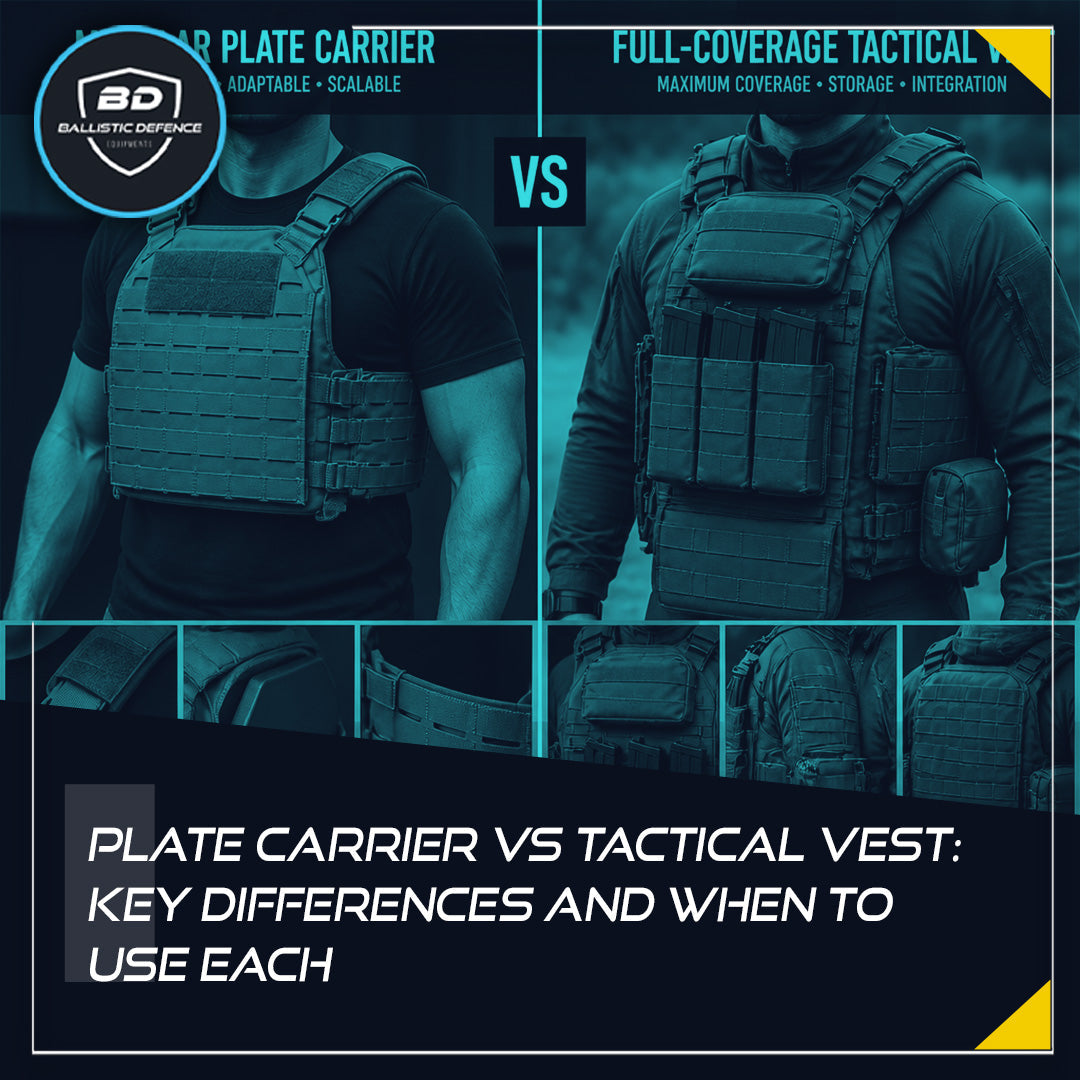
Choosing between a plate carrier and a tactical vest is one of the first decisions buyers face when building a protective or load-bearing setup. Although the two are often confused, they serve different purposes, and understanding the key differences helps you pick the right gear for your specific mission, role, or threat environment.
This guide explains exactly what separates a plate carrier from a tactical vest, the advantages of each, and when you should choose one over the other.
What Is a Plate Carrier?
A plate carrier is a vest-style platform designed specifically to hold hard armor plates in front and back, and sometimes on the sides. Its primary job is ballistic protection: it positions rifle-rated or handgun-rated plates over your vital areas while allowing you to add pouches and gear. A plate carrier without plates offers no ballistic protection on its own.
Plate carriers are the go-to choice when stopping rifle threats matters. A model like the ARARAT 2.1 Rapid Plate Carrier Vest is built to hold hard plates securely while supporting movement and rapid access to equipment.
What Is a Tactical Vest?
A tactical vest is primarily a load-bearing platform designed to carry magazines, pouches, tools, and other gear. While some tactical vests can accommodate soft armor, their main purpose is organization and equipment access rather than stopping rifle threats. They prioritize mobility and storage over heavy ballistic protection.
Tactical vests suit roles where carrying gear efficiently matters more than rifle-rated protection, such as certain support, training, or utility-focused tasks. The distinction comes down to protection versus carrying capacity.
Key Differences Between Plate Carriers and Tactical Vests
The core difference is purpose. A plate carrier exists to hold ballistic plates and deliver protection against serious threats. A tactical vest exists to carry equipment and distribute load. Plate carriers emphasize armor; tactical vests emphasize storage and mobility.
Weight is another factor. With plates installed, a plate carrier is heavier but offers rifle-rated protection. A tactical vest is generally lighter but provides little to no ballistic defense unless paired with soft armor.
When to Choose a Plate Carrier
Choose a plate carrier when ballistic protection is your priority, especially against rifle threats. If you need to stop higher-energy rounds and protect vital areas, a plate carrier loaded with the right plates is the correct choice. This is the standard approach for overt tactical and high-threat environments.
For a rifle-rated setup, pairing a carrier like the ARARAT 2.1 Rapid Plate Carrier Vest with plates such as the ZIRH Level III Hard Body Armor Plate – 2.64 lbs or the ZIRH Level IV Hard Body Armor Plate – 6.4 lbs creates a complete protective system.
When to Choose a Tactical Vest
Choose a tactical vest when your main need is carrying gear with maximum mobility and minimal weight. If rifle-rated protection isn't your top concern, a tactical vest gives you organized storage, quick access to equipment, and a lighter overall load.
Some users combine approaches, using soft armor for handgun-threat protection while relying on a vest for load-bearing. The right setup always depends on the balance between protection and carrying needs.
Can You Combine Protection and Load-Bearing?
Yes. Many modern plate carriers are designed to do both, holding hard plates for protection while also offering MOLLE webbing and attachment points for pouches and gear. This hybrid approach lets you build a single platform that protects and carries equipment at the same time.
For most buyers focused on protection, starting with a quality plate carrier and adding pouches as needed offers the best of both worlds: rifle-rated defense plus practical load-bearing capacity.
Matching Your Gear to Your Mission
The plate carrier versus tactical vest decision ultimately comes down to your mission. If protection against serious threats is essential, a plate carrier with proper plates is the clear answer. If carrying gear efficiently is the priority, a tactical vest may serve you better.
For buyers building a protective setup, explore rifle-rated options in the Body Armor collection and pair them with a reliable carrier to get both protection and functionality in one platform.
Frequently Asked Questions About Plate Carriers and Tactical Vests
What's the main difference between a plate carrier and a tactical vest?
A plate carrier holds ballistic plates for protection, while a tactical vest is primarily a load-bearing platform for carrying gear. One emphasizes armor, the other emphasizes storage.
Does a plate carrier provide protection without plates?
No. A plate carrier on its own offers no ballistic protection. It must be loaded with appropriate hard or soft armor plates to protect against threats.
Can a tactical vest stop bullets?
Most tactical vests are designed for carrying gear, not stopping rifle threats. Some can hold soft armor for handgun-threat protection, but they don't provide rifle-rated defense on their own.
Which is better for rifle protection?
A plate carrier loaded with rifle-rated hard plates is the better choice for rifle protection. Tactical vests are not designed to stop high-energy rifle rounds.
Can I use one platform for both protection and gear?
Yes. Many plate carriers include MOLLE webbing and attachment points, letting you carry pouches and gear while still holding ballistic plates for protection.