
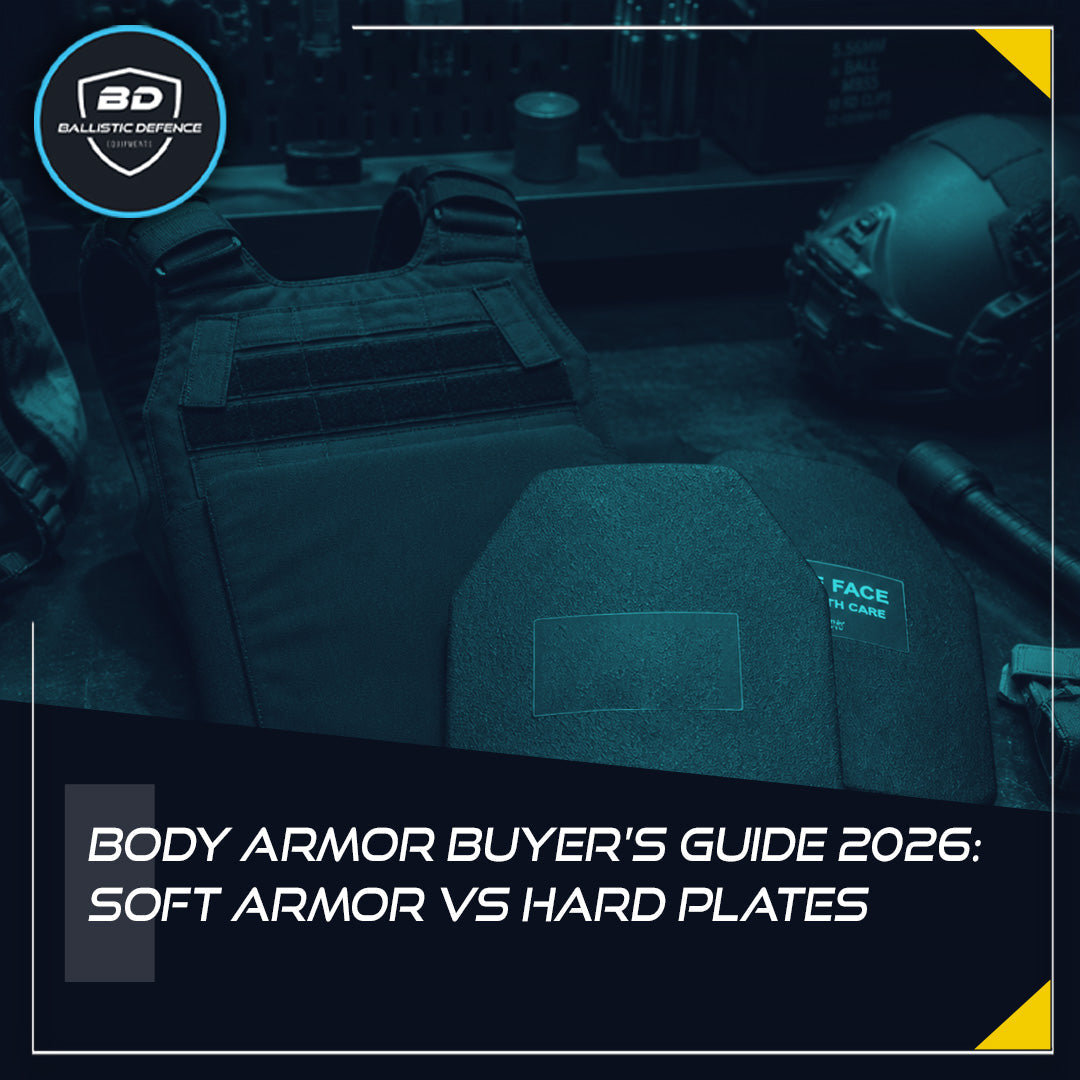
Choosing body armor in 2026 comes down to one fundamental decision: soft armor or hard plates. Each type serves a different purpose, protects against different threats, and suits different needs, so understanding the difference is the key to buying the right protection for your situation.
This buyer's guide breaks down soft armor versus hard plates, explains what each is best for, and helps you decide which type, or combination, is right for you in 2026.
Soft Armor vs Hard Plates: The Core Difference
The fundamental difference is the threat each is designed to stop. Soft body armor is built primarily for handgun threats, using flexible layered materials that are lighter and easier to conceal. Hard armor plates use rigid materials to stop higher-energy rifle threats, offering greater protection at the cost of more weight and bulk.
Neither is universally "better", they serve different roles. The right choice depends entirely on the threats you expect to face and how you plan to wear your armor.
What Is Soft Body Armor?
Soft body armor consists of flexible, layered ballistic materials designed to stop handgun threats. Its key advantages are lighter weight, flexibility, and the ability to be concealed under clothing, making it ideal for everyday wear and lower-profile protection.
For buyers prioritizing concealment and comfort against handgun threats, a product like the PREIS Concealable Soft Body Armor Vest offers practical, wearable protection suited to daily use.
What Are Hard Armor Plates?
Hard armor plates are rigid panels designed to stop rifle threats that soft armor can't handle. Made from materials like ceramic, polyethylene, or steel, they provide much higher protection levels but are heavier and require a plate carrier to wear.
For rifle-rated protection, options range from the lighter ZIRH Level III Hard Body Armor Plate – 2.64 lbs to the maximum-protection ZIRH Level IV Hard Body Armor Plate – 6.4 lbs, letting you match the plate to your threat level.
Weight and Comfort Considerations
Weight is a major factor in the soft versus hard decision. Soft armor is significantly lighter and more comfortable for extended wear, while hard plates add weight that can cause fatigue over long periods. For all-day concealed wear, soft armor often wins on comfort.
That said, comfort means little if the armor can't stop the threats you face. The goal is to match protection to your real needs while keeping the setup as comfortable as practical.
Concealment vs Overt Protection
Soft armor excels at concealment, making it ideal when you need protection without drawing attention. Hard plates in a carrier are overt and bulkier, suited to situations where visible, maximum protection is appropriate, such as tactical operations or high-threat environments.
Your need for concealment versus overt protection is a key factor in choosing between soft armor and hard plates, alongside the threat level itself.
Can You Combine Soft Armor and Hard Plates?
Yes. Many setups combine both: soft armor for baseline handgun protection and hard plates for rifle threats when needed. Some carriers accept both soft and hard armor, letting you adjust your protection level based on the situation.
This layered approach offers flexibility, providing comfortable everyday protection with the option to add rifle-rated plates when the threat environment calls for it.
Matching Armor to Your Threat Level
The most important factor in choosing body armor is your actual threat environment. If handgun threats are your concern, soft armor may be sufficient. If rifle threats are a possibility, hard plates become necessary. Be honest about the risks you realistically face.
Browse both types in the Body Armor collection to compare soft armor and hard plate options and find protection matched to your specific needs.
Building a Complete Setup
If you choose hard plates, you'll need a carrier to hold them. A reliable option like the ARARAT 2.1 Rapid Plate Carrier Vest turns plates into a complete, wearable system that supports movement and gear access.
Whether you go with soft armor, hard plates, or both, building a complete, properly fitted setup ensures your armor delivers the protection it's designed to provide when it matters most.
Choosing the Right Body Armor in 2026
The soft armor versus hard plates decision comes down to your threats, your need for concealment, and your comfort priorities. Soft armor suits concealable handgun protection, while hard plates handle rifle threats with overt, maximum protection.
By honestly assessing your needs and matching your armor accordingly, you'll choose protection that genuinely fits your situation, making for a smarter, more confident body armor purchase in 2026.
Frequently Asked Questions About Soft Armor vs Hard Plates
What's the difference between soft armor and hard plates?
Soft armor is flexible and stops handgun threats while being lighter and concealable. Hard plates are rigid, stop rifle threats, and offer higher protection at the cost of more weight.
Which is better, soft armor or hard plates?
Neither is universally better. Soft armor suits concealable handgun protection, while hard plates handle rifle threats. The right choice depends on your threat environment and needs.
Can I conceal hard armor plates?
Hard plates in a carrier are generally overt and bulkier. For concealment, soft armor is the better choice, as it's lighter and designed to be worn under clothing.
Do I need both soft armor and hard plates?
Not necessarily. Some users combine both for flexibility, but your threat environment determines what you need. Handgun threats may only require soft armor, while rifle threats need hard plates.
What do I need to wear hard plates?
Hard plates require a plate carrier to hold them in place and turn them into a wearable system. Soft armor vests typically don't need a separate carrier.