
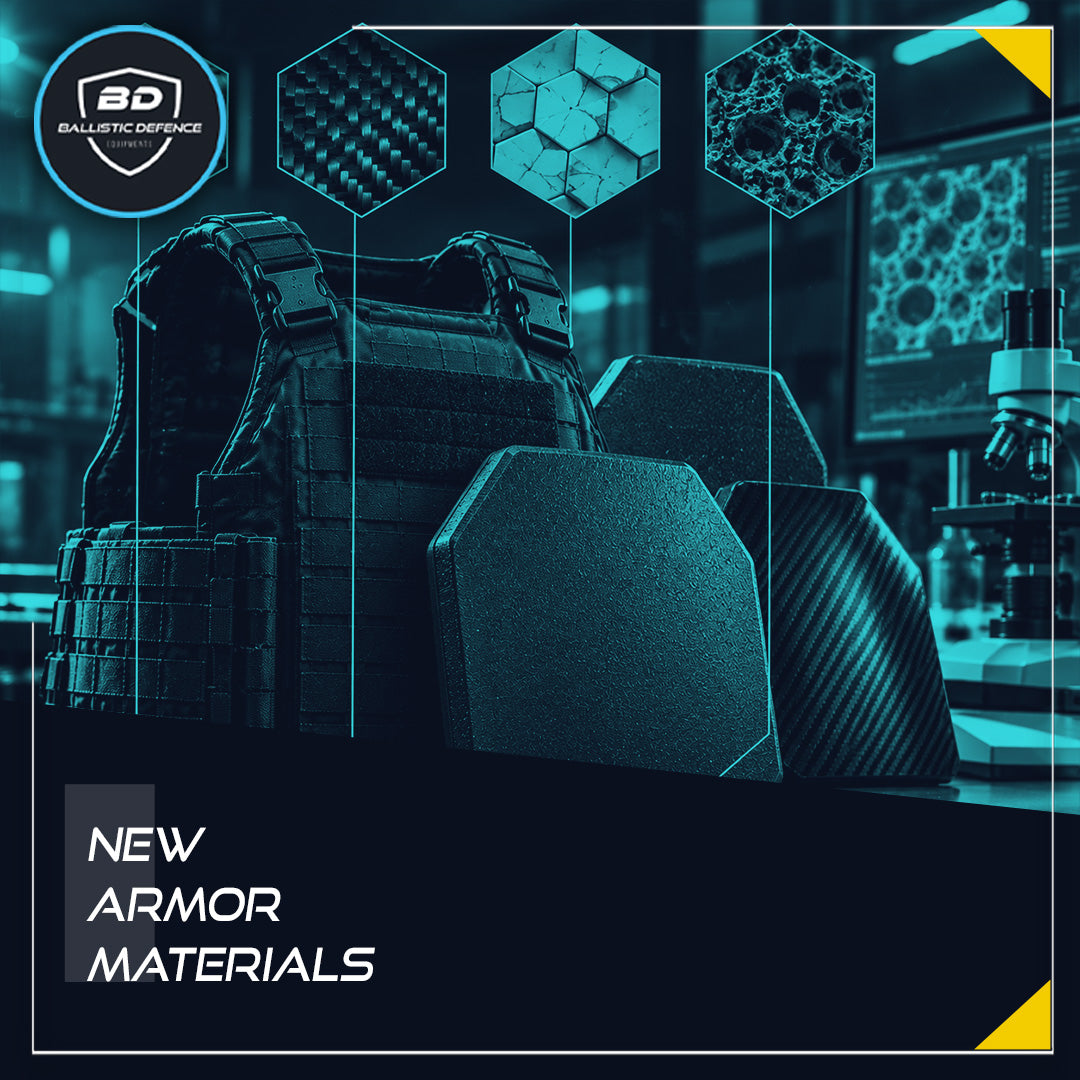
The armor you can buy in 2026 is dramatically lighter, stronger, and smarter than the gear of even five years ago - and the reason is material science. Advances in body armor materials and technology have pushed ultra-high-molecular-weight polyethylene (UHMWPE), next-generation ceramics, and hybrid composite construction to the point where a plate that stops a rifle round can weigh a third of what an old steel plate did. This guide explains the materials behind modern ballistic protection, how each one defeats a threat, and the 2026 innovations that are reshaping what armor can do.
How Ballistic Materials Actually Stop a Bullet
All armor works by absorbing and redistributing the kinetic energy of a projectile faster than the projectile can penetrate. Soft armor does this by catching the bullet in a dense web of high-tensile fibers that stretch and deform the round. Hard armor adds a strike face that shatters or blunts the projectile before a backing layer catches the fragments. The art of modern armor is doing this with the least possible weight and thickness - and that is entirely a materials problem, which is why understanding the materials tells you more about a plate than the price tag does.
UHMWPE: The Lightweight Revolution
Ultra-high-molecular-weight polyethylene is the single most important material in modern lightweight armor. Its molecular chains are extraordinarily long and aligned, giving it a strength-to-weight ratio greater than steel while floating in water. Pure polyethylene plates can defeat rifle threats like 5.56 and 7.62x39 at a fraction of the weight of steel or ceramic, which is why they dominate the lightweight category. A plate built around this technology, such as the Bedrock Level III Plate (4.74 lb), delivers RF1 rifle protection at a weight an officer can actually wear all day. For a deeper look at this trend, see our guide to lightweight body armor innovations for 2026.
Advanced Ceramics for Armor-Piercing Threats
When the threat escalates to armor-piercing rifle rounds, ceramics take over. Modern armor ceramics - boron carbide, silicon carbide, and advanced alumina formulations - are among the hardest manufactured materials on earth. They work by shattering the hardened core of an AP round on impact, spreading the energy across the strike face while a composite backer catches the debris. This is how a Bedrock Level IV Plate (5.84 lb) stops a .30-06 M2 armor-piercing round that would punch straight through lesser materials. The 2026 generation of ceramics achieves the same RF3 protection with better multi-hit tolerance and tighter thickness than earlier monolithic tiles.
Aramid Fibers and Modern Soft Armor
Soft armor still relies on woven and laminated aramid fibers - the family that includes the original para-aramid weaves - prized for their heat tolerance and energy absorption. In 2026, soft panels increasingly blend aramid with polyethylene film laminates to cut weight and improve multi-threat performance, including stab and spike resistance. A concealable vest like the Preis Level IIIA Concealable Armor Vest showcases this hybrid approach, delivering handgun and edged-weapon protection in a flexible, wearable panel. The result is soft armor that is thinner and more comfortable without giving up the IIIA/HG2 rating.