
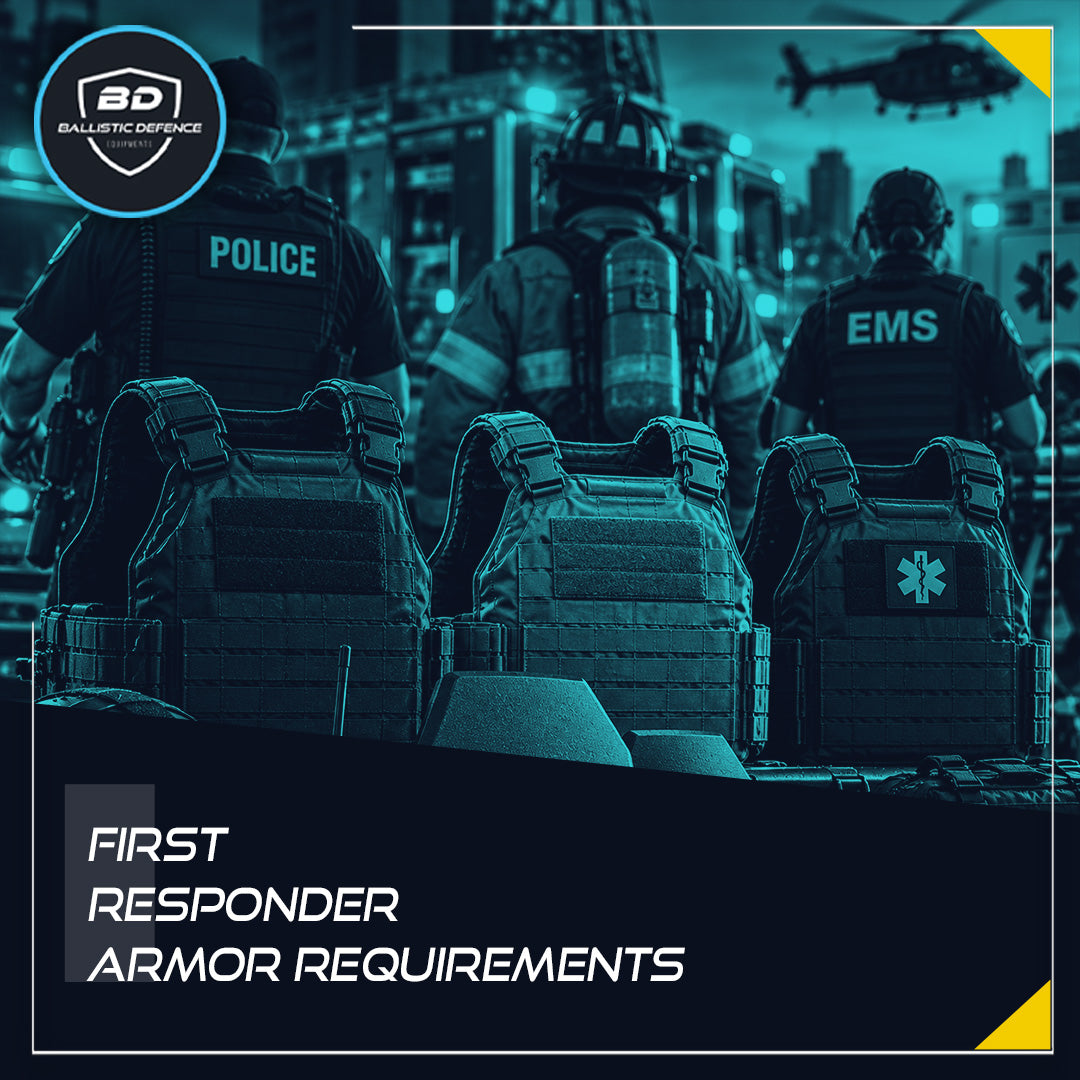
Firefighters, paramedics, and EMTs increasingly arrive on scenes that are not yet secure - and that reality has made first responder body armor a frontline survival tool rather than a police-only item. Across the United States in 2026, EMS and fire agencies are issuing ballistic protection to crews who respond to active-violence incidents, overdoses, domestic calls, and mass-casualty events where the threat may still be present. This guide explains exactly what EMS and first responder body armor needs to do, the NIJ protection levels that matter, the balance between ballistic and edged-weapon defense, and the specific gear that fits the job.
Why First Responders Now Need Body Armor
The operating environment for EMS has changed. Medics are now part of Rescue Task Force (RTF) models that move into the warm zone of an active-shooter scene alongside law enforcement to reach the wounded faster. They respond to volatile behavioral-health and overdose calls, and they treat patients in crowds where assaults on providers are rising. In each case the responder's own survival determines whether the patient survives. Body armor converts a provider from a potential casualty into someone who can keep working, which is why fire and EMS leadership increasingly treat it as standard-issue PPE alongside gloves and eye protection.
What Protection Level Does EMS Body Armor Need?
For the overwhelming majority of EMS and fire applications, soft armor rated to NIJ Level IIIA (classified HG2 under the newer NIJ 0101.07 standard) is the correct choice. It defeats virtually all common handgun threats - including 9mm, .40 S&W, .45 ACP, .357 SIG, and .44 Magnum - while remaining light and flexible enough to wear across a 12-hour shift under or over a uniform. A concealable soft vest such as the Preis Level IIIA Concealable Armor Vest is purpose-built for this role, pairing handgun protection with knife and spike resistance in a low-profile package. If you are new to the rating system, our breakdown of NIJ body armor levels in 2026 walks through every tier.
Ballistic vs Edged-Weapon Protection
This is the detail most EMS buyers miss. Standard ballistic soft armor is engineered to catch and deform a bullet, but it does not automatically stop a knife or hypodermic needle - a sharp point can slip between the woven aramid fibers. Because paramedics face stabbings, agitated patients, and contaminated sharps far more often than gunfire, multi-threat armor that combines ballistic protection with stab and spike resistance is often the smarter buy. The Preis vest's knife-resistant construction addresses exactly this overlap, giving a medic one garment that covers both the bullet and the blade.
Soft Armor vs Hard Plates for First Responders
Soft armor is the baseline for EMS because it is comfortable, concealable, and covers a wide torso area. Hard rifle plates enter the picture only for crews assigned to Rescue Task Forces or jurisdictions with elevated rifle threats. A lightweight insert such as the Bedrock Level IIIA Plate (1.21 lb) can upgrade spike-of-the-moment protection without major weight, while rifle-rated plates add defeat capability against long guns at the cost of bulk and fatigue. Most EMS systems settle on soft IIIA as the default and reserve plates for specialized teams.
EMS Body Armor Comparison
| Option | NIJ Rating | Stops | Weight | Best EMS Use |
|---|