
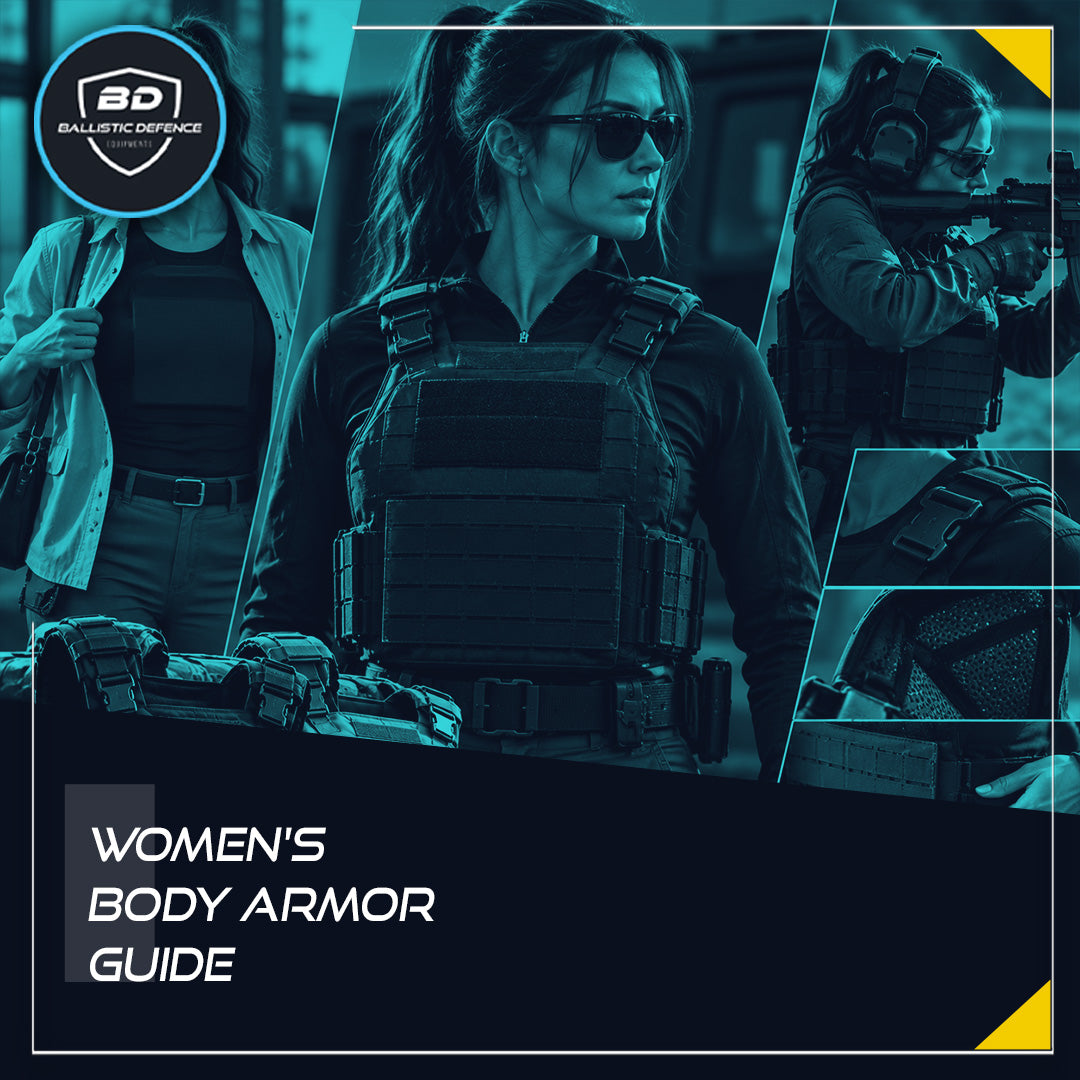
Protection should never require compromise, yet most armor on the market was engineered around a male torso - which is exactly why this women's body armor guide matters. Fit is not a cosmetic concern; armor that doesn't sit correctly leaves gaps over vital organs, shifts under movement, and becomes so uncomfortable that it gets left behind. This guide explains how women's anatomy changes armor fit, which certified options work best, and how to size soft armor and plate carriers so protection stays exactly where it belongs in 2026.
Why Fit Is a Safety Issue, Not a Preference
Body armor only protects the area it covers and stays put over. A panel that rides up, gaps at the chest, or digs into the hips redistributes coverage away from vital organs and creates pressure points that cause fatigue and bruising. For women, the differences in torso length, shoulder width, waist-to-hip ratio, and chest contour mean a "unisex" panel often sits wrong. Correct fit keeps the ballistic material flat against the body, which also matters for backface deformation - armor that stands off the torso transmits more blunt trauma even when it stops the round.
Soft Armor: The Best Starting Point for Most Women
Flexible soft armor adapts to the body far better than rigid plates, making it the most comfortable and concealable option for everyday protection. A Level IIIA concealable vest like the Preis Level IIIA Concealable Armor Vest molds to the torso, stops handgun threats up to .44 Magnum, and adds knife- and spike-resistance. Because the panels flex, they accommodate a wider range of body shapes than a flat hard plate ever could - a decisive advantage for women seeking all-day, low-profile wear.
Understanding Protection Levels
Fit matters, but so does what the armor stops. Under NIJ 0101.07, soft concealable armor carries handgun ratings HG1 (9mm, .357 Magnum) and HG2 (.357 SIG, .44 Magnum); rifle protection requires hard plates rated RF1, RF2, or RF3. Legacy 0101.06 labels show IIA/II/IIIA for soft armor and III/IV for rifle plates. Most women choosing armor for personal defense are addressing a handgun threat, which makes certified IIIA soft armor both the best-fitting and the right-rated choice.
Contoured Plates and the Multi-Curve Advantage
When rifle protection is required, a multi-curve plate is far superior to a flat single-curve one for female wearers. Multi-curve plates bend on more than one axis, hugging the chest contour instead of bridging across it. A Bedrock Level IIIA Multi-Curve Plate at just 1.21 lb offers a rigid but body-conforming profile, and multi-curve geometry reduces the gapping that causes discomfort and coverage loss. The curve is what turns a plate from "tolerable" to "wearable all day."
Plate Carriers Sized for Women
A carrier is what holds plates in the right position, and sizing it correctly is critical. Look for adjustable cummerbunds, shoulder straps that can be shortened for a narrower frame, and a cut that lets the front plate sit at the right height - the top edge roughly level with the jugular notch, not riding into the collarbone. A compact, lightweight platform such as the CEBE 2.2 Lightweight MOLLE Plate Carrier adjusts down to smaller torsos while still accepting standard 10x12 plates, making it a practical choice for many women.