
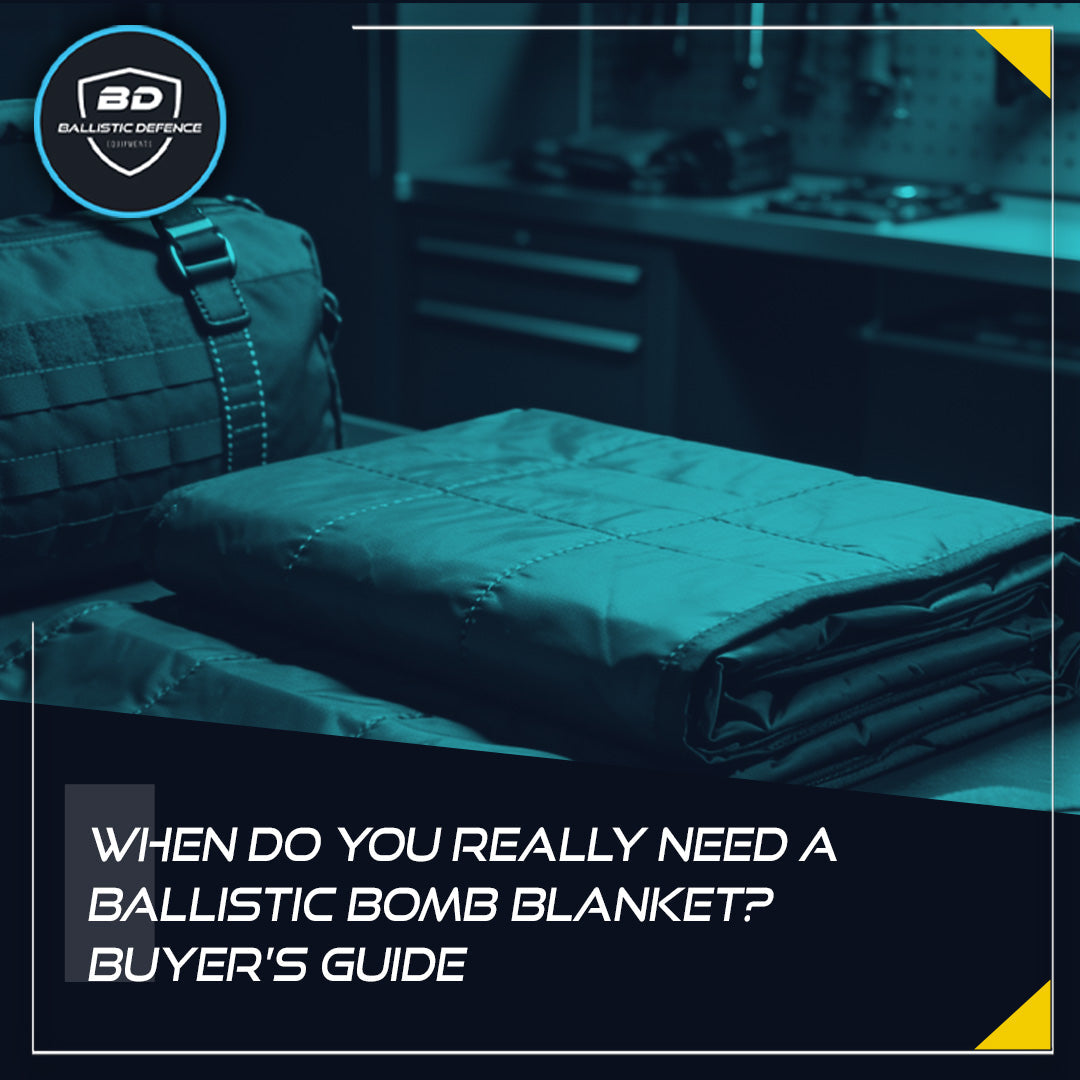
A ballistic bomb blanket is a specialized piece of protective equipment designed to contain or reduce the effects of an explosion or fragmentation, but it isn't something every buyer needs. Knowing when a bomb blanket is genuinely useful, and when other protection makes more sense, is essential before investing in one.
This buyer's guide explains what a bomb blanket does, who actually needs one, and how to decide whether it belongs in your protective toolkit in 2026.
What Is a Ballistic Bomb Blanket?
A ballistic bomb blanket is a flexible, layered protective covering designed to absorb and contain fragmentation and blast effects from an explosive device. Rather than protecting a person's body like a vest, it's typically deployed over or around a suspected device or threat to reduce the spread of fragments and mitigate blast damage.
Bomb blankets are often rated to ballistic standards such as NIJ Level IIIA, reflecting their ability to stop or slow fragmentation and certain ballistic threats. They serve a very different role from wearable body armor.
How a Bomb Blanket Differs From Body Armor
The key difference is purpose. Body armor protects a person's torso during a confrontation, while a bomb blanket is a containment and mitigation tool used around a threat. One is worn; the other is deployed. Understanding this distinction is crucial, because a bomb blanket is not a substitute for personal body armor.
For personal protection against ballistic threats, wearable armor from the Body Armor collection remains the appropriate choice. A bomb blanket addresses a specialized explosive-threat scenario instead.
Who Actually Needs a Bomb Blanket?
Bomb blankets are primarily relevant to specialized users such as EOD (explosive ordnance disposal) teams, bomb squads, security personnel handling suspicious packages, and certain high-risk facilities. These users face explosive threats as part of their role and benefit from a tool designed to contain or mitigate them.
For the average civilian or even many tactical users, a bomb blanket is unlikely to be necessary. The need is driven by the specific threat environment rather than general preparedness.
When a Bomb Blanket Makes Sense
A bomb blanket makes sense when your role involves potential exposure to explosive devices, fragmentation hazards, or the need to contain a suspicious item. In these situations, having a purpose-built mitigation tool can reduce the severity of an explosion's effects and protect people and property nearby.
If your threat assessment includes explosive or fragmentation risks, a bomb blanket becomes a logical addition to your protective equipment. If it doesn't, your resources are likely better spent on personal body armor and other gear.
When You Don't Need a Bomb Blanket
If your primary concern is personal protection against handgun or rifle threats, you don't need a bomb blanket, you need appropriate body armor. For handgun-threat protection, a plate like the ZIRH Level IIIA Hard Body Armor Plate – 1.21 lbs is far more relevant, while rifle threats call for the ZIRH Level III Hard Body Armor Plate – 2.64 lbs or the ZIRH Level IV Hard Body Armor Plate – 6.4 lbs.
Matching your equipment to your actual threats ensures you invest in protection that genuinely fits your needs rather than gear designed for a scenario you're unlikely to face.
Evaluating Your Threat Environment
The most important step before buying a bomb blanket is an honest threat assessment. Ask whether your role, location, or responsibilities realistically involve explosive or fragmentation hazards. If they do, a bomb blanket is worth considering. If not, your protective budget is better directed elsewhere.
This kind of clear-eyed evaluation prevents over-investing in specialized gear while ensuring you have the right protection for the threats you actually face.
Pairing a Bomb Blanket With a Complete Protective Setup
For users who do need a bomb blanket, it works best as one component of a broader protective strategy. Personal body armor, plate carriers, and other gear handle direct threats, while the bomb blanket addresses explosive containment. Together, they cover a wider range of scenarios.
Even specialized teams typically combine wearable protection with mitigation tools. Pairing a carrier like the ARARAT 2.1 Rapid Plate Carrier Vest and rated plates with a bomb blanket creates a more complete response capability for high-risk roles.
Making the Right Decision in 2026
Whether you need a ballistic bomb blanket comes down to one question: does your threat environment include explosive or fragmentation hazards? For specialized teams and high-risk roles, the answer may be yes. For most others, personal body armor is the more relevant investment.
By understanding what a bomb blanket does and honestly assessing your needs, you can make a confident decision and direct your resources toward the protection that truly matters for your situation.
Frequently Asked Questions About Ballistic Bomb Blankets
What is a ballistic bomb blanket used for?
A bomb blanket is used to contain or mitigate the effects of an explosion or fragmentation, typically deployed over or around a suspected device rather than worn on the body.
Is a bomb blanket the same as body armor?
No. Body armor protects a person's torso during a confrontation, while a bomb blanket is a containment and mitigation tool for explosive threats. They serve different purposes.
Who needs a bomb blanket?
Bomb blankets are mainly relevant to EOD teams, bomb squads, security personnel, and high-risk facilities that face explosive or fragmentation hazards as part of their role.
Do civilians need a bomb blanket?
Most civilians don't. Unless your situation involves explosive threats, personal body armor is a more relevant and practical protective investment.
Can a bomb blanket replace body armor?
No. A bomb blanket is not a substitute for wearable body armor. For personal ballistic protection, you should use appropriate body armor instead.