
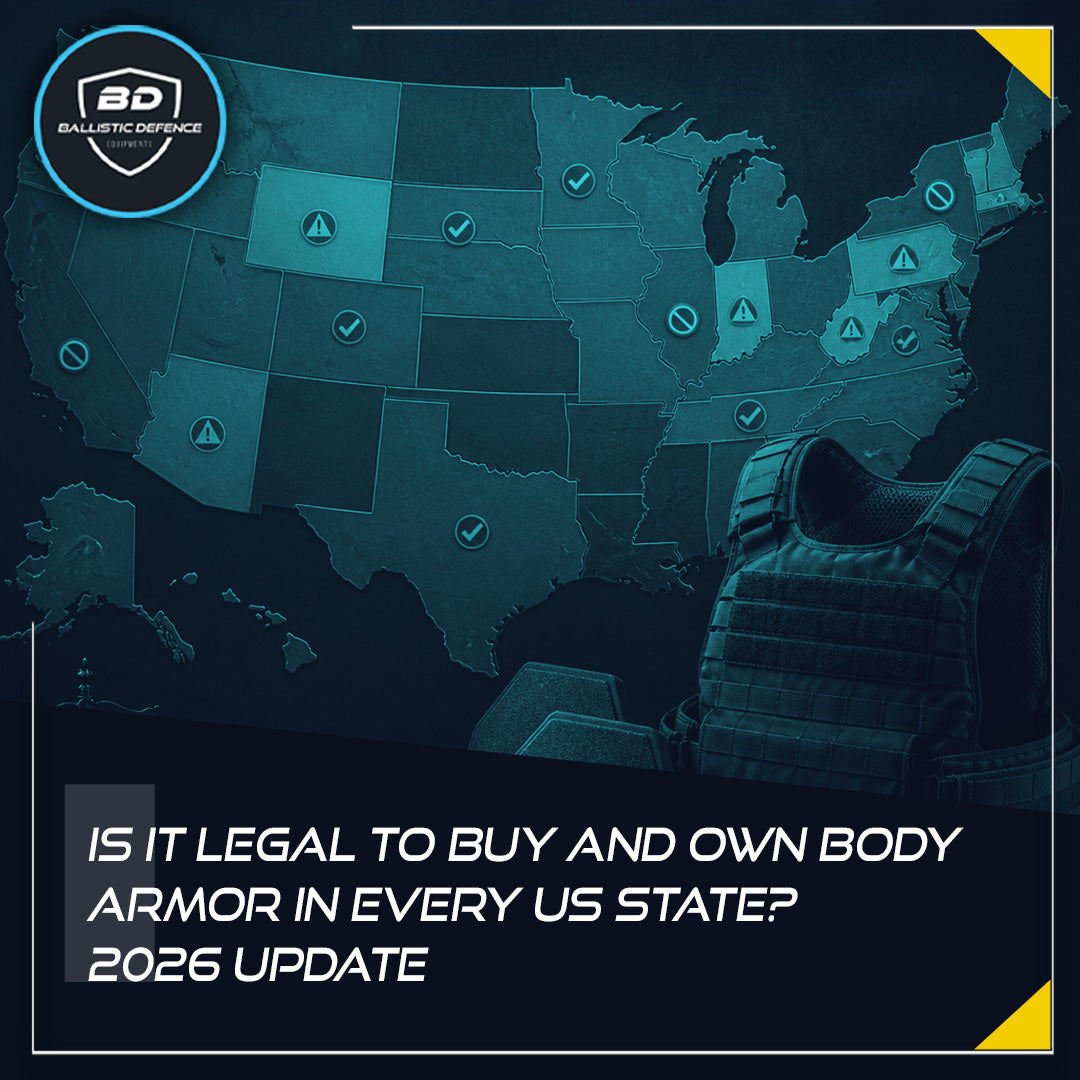
Body armor is legal to buy and own for most civilians across the United States, but the rules aren't identical everywhere, and they can change. Understanding the general legal landscape, along with the key exceptions, helps you buy body armor confidently while staying on the right side of the law in 2026.
This guide explains the general legality of buying and owning body armor in the US, the main exceptions to be aware of, and why checking your specific local laws is always essential.
Note: This article is general information, not legal advice. Laws vary by location and change over time. Always verify the current rules in your specific state and locality, and consult a qualified attorney for legal guidance.
The General Rule: Body Armor Is Legal for Most Civilians
In most of the United States, it is legal for civilians to purchase and own body armor, including soft armor and hard plates. For the majority of law-abiding adults, buying protective gear like a vest or plates is permitted, and many people do so for personal safety and peace of mind.
This general legality is why body armor is widely available to civilians. However, "generally legal" doesn't mean "unrestricted everywhere", which is where the important exceptions come in.
The Key Federal Restriction
At the federal level, the most significant restriction involves convicted violent felons. Federal law generally prohibits individuals convicted of a violent felony from purchasing or possessing body armor, with limited exceptions. This is the main nationwide legal limitation most buyers should be aware of.
For law-abiding civilians without such convictions, this federal restriction typically doesn't apply, but it's an important baseline to understand when considering the legality of body armor ownership.
State and Local Variations
Beyond federal law, individual states and localities can have their own rules. Some jurisdictions impose additional restrictions, such as limits on purchasing methods, enhanced penalties for using body armor during a crime, or specific local regulations. These vary from place to place.
Because of this patchwork, body armor that's straightforward to buy in one state may have additional considerations in another. This is exactly why checking your specific state and local laws before purchasing is so important.
Common Types of Restrictions to Watch For
When researching your local laws, watch for a few common categories of restriction: prohibitions tied to criminal history, rules about how body armor can be purchased (such as in-person versus online), and enhanced penalties for possessing or using armor while committing a crime. Most law-abiding buyers won't be affected, but awareness matters.
The specifics differ by jurisdiction, so the safest approach is always to confirm the current rules where you live rather than assuming national uniformity.
Why Laws Can Change
Body armor laws aren't static. Legislators periodically introduce or update regulations, and what's accurate today may change in the future. This is why any guide, including this one, should be treated as a general starting point rather than a definitive, permanent answer.
Staying informed about current laws in your area, especially before making a purchase, ensures you're acting on up-to-date information rather than outdated assumptions.
How to Verify the Rules Where You Live
To confirm the rules in your area, check official state government resources, review current statutes, and when in doubt, consult a qualified attorney familiar with your jurisdiction. Reputable retailers may also provide general guidance, but official sources and legal professionals are the most reliable.
Taking a few minutes to verify the current rules gives you confidence that your body armor purchase is fully compliant with the laws that apply to you.
Buying Body Armor Responsibly
For the vast majority of law-abiding civilians, buying body armor is a legal and responsible step toward personal protection. Once you've confirmed it's legal in your area, you can focus on choosing the right protection for your needs, whether that's concealable soft armor or rifle-rated hard plates.
Explore protection options in the Body Armor collection to find armor matched to your threat environment, and pair hard plates with a carrier like the ARARAT 2.1 Rapid Plate Carrier Vest for a complete setup.
The Bottom Line on Body Armor Legality in 2026
Body armor is legal to buy and own for most civilians across the US, with the most notable restriction applying to convicted violent felons under federal law, plus a patchwork of state and local rules. For law-abiding buyers, it's generally accessible, but local laws always take priority.
Before purchasing, verify the current rules in your specific state and locality, and consult a legal professional if you have any doubts. With that confirmed, you can buy body armor with confidence in 2026.
Frequently Asked Questions About Body Armor Legality
Is body armor legal to own in the US?
For most civilians, yes. Buying and owning body armor is generally legal across the US, though specific state and local rules vary and should be verified.
Who is prohibited from owning body armor?
Federal law generally prohibits individuals convicted of a violent felony from purchasing or possessing body armor, with limited exceptions. Most law-abiding civilians are not affected.
Do body armor laws vary by state?
Yes. Beyond federal law, states and localities can have their own rules, such as purchasing restrictions or enhanced penalties for criminal use. Always check your local laws.
Can I buy body armor online?
In many areas, yes, but some jurisdictions have rules about purchasing methods. Verify the current regulations in your specific state and locality before buying.
Is this article legal advice?
No. This is general information only. Laws vary and change over time, so always verify current rules in your area and consult a qualified attorney for legal guidance.