
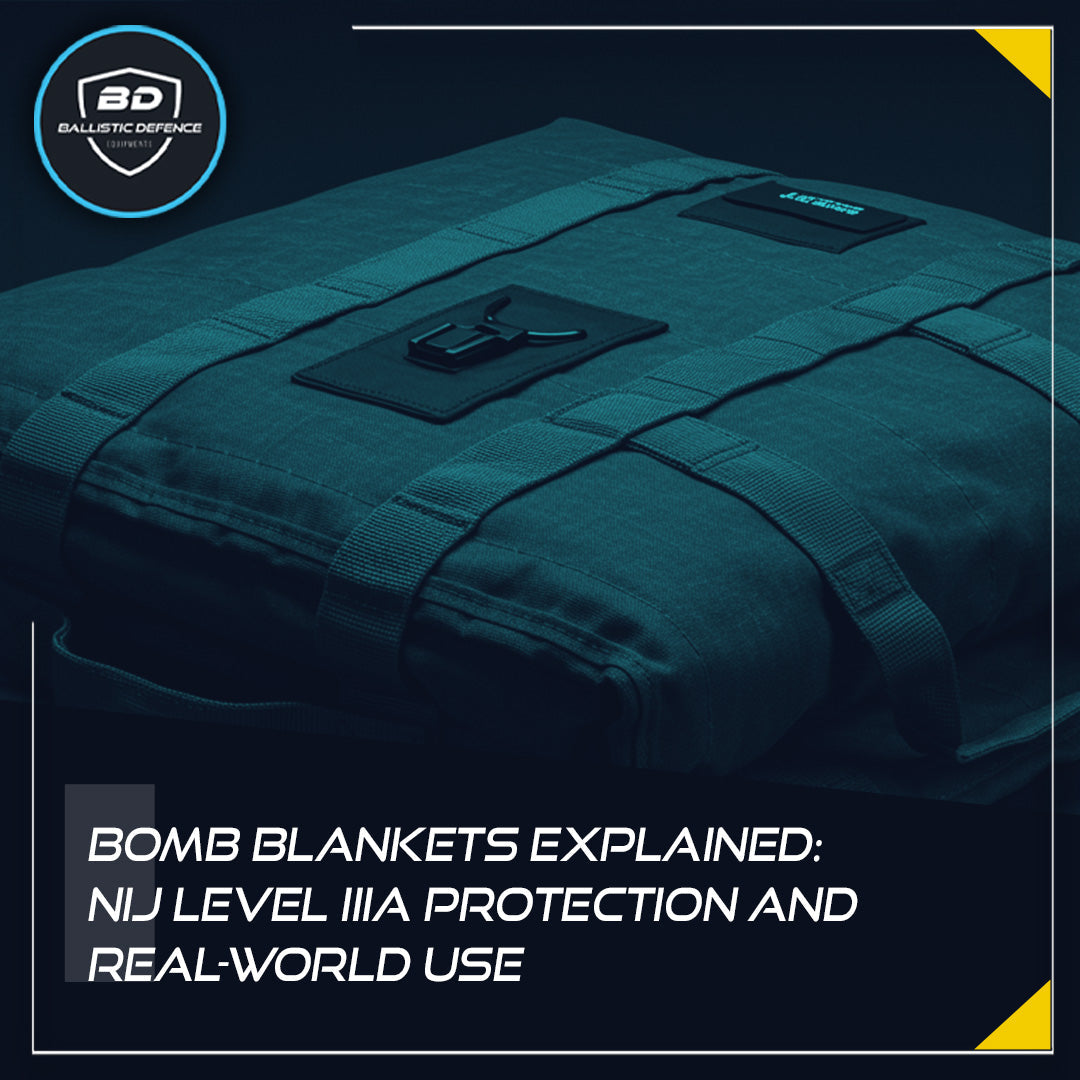
Bomb blankets are specialized protective systems designed to help reduce the effects of blast pressure, fragmentation, and related hazards in emergency situations. While many buyers are more familiar with ballistic vests and hard armor plates, bomb blankets serve a very different role. They are not simply wearable armor in a different shape. Instead, they are flexible protective tools used to isolate suspicious objects, create a layer of protection, and support emergency response efforts in high-risk environments.
For buyers in the U.S. market, bomb blankets are especially important because they provide a practical solution for temporary threat containment before explosive ordnance disposal teams or other trained personnel take over. In environments such as transportation hubs, public facilities, government buildings, event venues, and security-sensitive locations, having the right protective equipment available can make a major difference in reducing risk to people and nearby infrastructure.
What Is a Bomb Blanket?
A bomb blanket is a heavy-duty protective blanket designed to help contain or reduce the impact of fragmentation and blast-related effects during explosive threat incidents. Unlike standard body armor that is worn on the body, a bomb blanket is deployed over or around a suspicious item or used as a protective barrier in a fast-moving emergency situation.
Its main purpose is to add a flexible layer of ballistic and fragmentation resistance in situations where a rapid protective response is needed. This makes bomb blankets useful for trained teams handling suspicious packages, explosive threat response procedures, and controlled protective positioning while waiting for specialized disposal units to arrive.
What Does NIJ Level IIIA Mean in This Context?
NIJ Level IIIA is a protection category commonly associated with high-level handgun-rated ballistic resistance. In the context of bomb blankets, Level IIIA is often referenced to indicate strong ballistic performance against handgun-related threats and fragmentation hazards, depending on the product design and intended use.
For buyers, this means a Level IIIA bomb blanket is generally positioned as a serious protective solution rather than an entry-level barrier. It is important, however, to understand that bomb blankets are not chosen only by looking at a protection label. Their real value comes from how they are used in controlled response scenarios, where flexibility, coverage, rapid deployment, and fragmentation mitigation all matter.
How Bomb Blankets Differ From Standard Body Armor
The biggest difference is function. Standard body armor is worn by the user and is meant to protect the torso or vital areas during direct threat exposure. A bomb blanket, by contrast, is typically deployed as a protective tool over an object, near an area of concern, or as a temporary shield in a dangerous environment.
This difference matters because bomb blankets are less about everyday wear and more about emergency deployment. They are intended for trained use in situations where the goal is not only personal protection but also threat isolation, fragment reduction, and risk mitigation for nearby people and property.
What Real-World Use Looks Like
In real-world applications, bomb blankets are often used when a suspicious package, bag, or object is discovered and there is a need to create a protective barrier quickly. Security teams, trained response personnel, and facility protection units may use a bomb blanket to help reduce the danger zone while evacuation or specialist response procedures are underway.
These products can also be relevant in environments where blast and fragmentation protection needs to be part of broader contingency planning. Airports, courthouses, embassies, critical infrastructure sites, event security operations, and certain industrial locations may all benefit from having dedicated protective equipment ready for these types of incidents.
Why Flexibility Matters
One of the key advantages of a bomb blanket is flexibility. Hard armor plates are extremely effective within their intended role, but they are rigid and designed to be integrated into carriers or shield systems. A blanket-style protective product offers more adaptable coverage and can be deployed in ways that hard armor cannot.
This flexibility makes bomb blankets useful in situations where the shape, size, or position of a threat is unpredictable. Being able to quickly place a protective layer over or around an area of concern can be far more practical than relying on fixed or body-worn armor alone.
Bomb Blankets and Fragmentation Risk
When buyers think about explosive threats, they often focus only on blast force. In reality, fragmentation is one of the most dangerous elements in many explosive incidents. A bomb blanket is valuable because it helps address that risk by acting as a protective barrier intended to reduce or contain dangerous fragments.
That is one reason these products are relevant even for buyers who already understand ballistic armor well. A plate carrier or concealable vest protects the wearer in a more traditional body armor sense, but a bomb blanket addresses a different part of the threat environment by helping manage the hazard at the source area.
Where Bomb Blankets Fit in a Complete Protection Strategy
A bomb blanket should not be viewed as a replacement for body armor, shields, or a complete protective system. Instead, it should be seen as a specialized part of a broader readiness strategy. In high-risk environments, different protective tools serve different functions, and the most effective approach is often layered rather than singular.
For example, a team may use wearable armor for personal protection, shields for directional cover, and a bomb blanket for localized threat containment. Each tool addresses a different operational requirement, and understanding those differences helps buyers choose more intelligently.
A Real Example on Ballistic Defence
On Ballistic Defence, the Cloaks of BD 3.0 Elite Armored Tactical Cloak is presented as an elite mission-grade armored tactical blanket engineered to help minimize the effects of blast pressure, fragmentation, and thermal exposure. It is described as a product designed for explosive threat containment and personnel protection operations, making it a strong example of how this category functions in real operational contexts.
For buyers looking beyond wearable armor alone, this type of product shows how ballistic protection can extend into more specialized emergency-response equipment. It is particularly relevant for organizations or professionals who need protective solutions not just for individual wear, but for incident response, public safety, and infrastructure risk reduction.
Who Should Consider a Bomb Blanket?
Bomb blankets are most relevant for buyers responsible for security planning, facility protection, public safety readiness, or specialized response capability. They are not typically impulse purchases or everyday consumer items. Instead, they are protective tools for users who need equipment that supports preparedness for serious threat scenarios.
This includes professional security teams, government-related facilities, transportation environments, sensitive sites, and organizations that want a more complete emergency protection posture. For these buyers, the value of a bomb blanket is not in daily wear comfort but in fast deployment, specialized coverage, and added protection during rare but high-consequence incidents.
What Buyers Should Look For
When evaluating a bomb blanket, buyers should look beyond the protection label alone. Material construction, deployment practicality, intended application, portability, coverage area, and the type of threat the product is designed to help mitigate are all important factors. The right product should match the actual operational environment in which it may be used.
It is also important to consider how the blanket fits into the rest of the protective setup. A bomb blanket may be used alongside body armor, shields, tactical outerwear, or response equipment, so compatibility with real-world procedures matters just as much as technical performance language.
Final Thoughts
Bomb blankets fill an important role in modern protective equipment by addressing blast-related and fragmentation-related risks in ways that standard body armor cannot. A NIJ Level IIIA-rated or IIIA-positioned bomb blanket is generally associated with serious ballistic performance, but the real value of the product comes from how it is used in emergency deployment and threat containment scenarios.
For buyers building a more complete protection strategy, bomb blankets deserve attention alongside vests, plates, carriers, and shields. On Ballistic Defence, the Cloaks of BD 3.0 Elite Armored Tactical Cloak shows how this category can serve real-world security and response needs by combining flexible deployment with protection-focused construction for high-risk environments.