
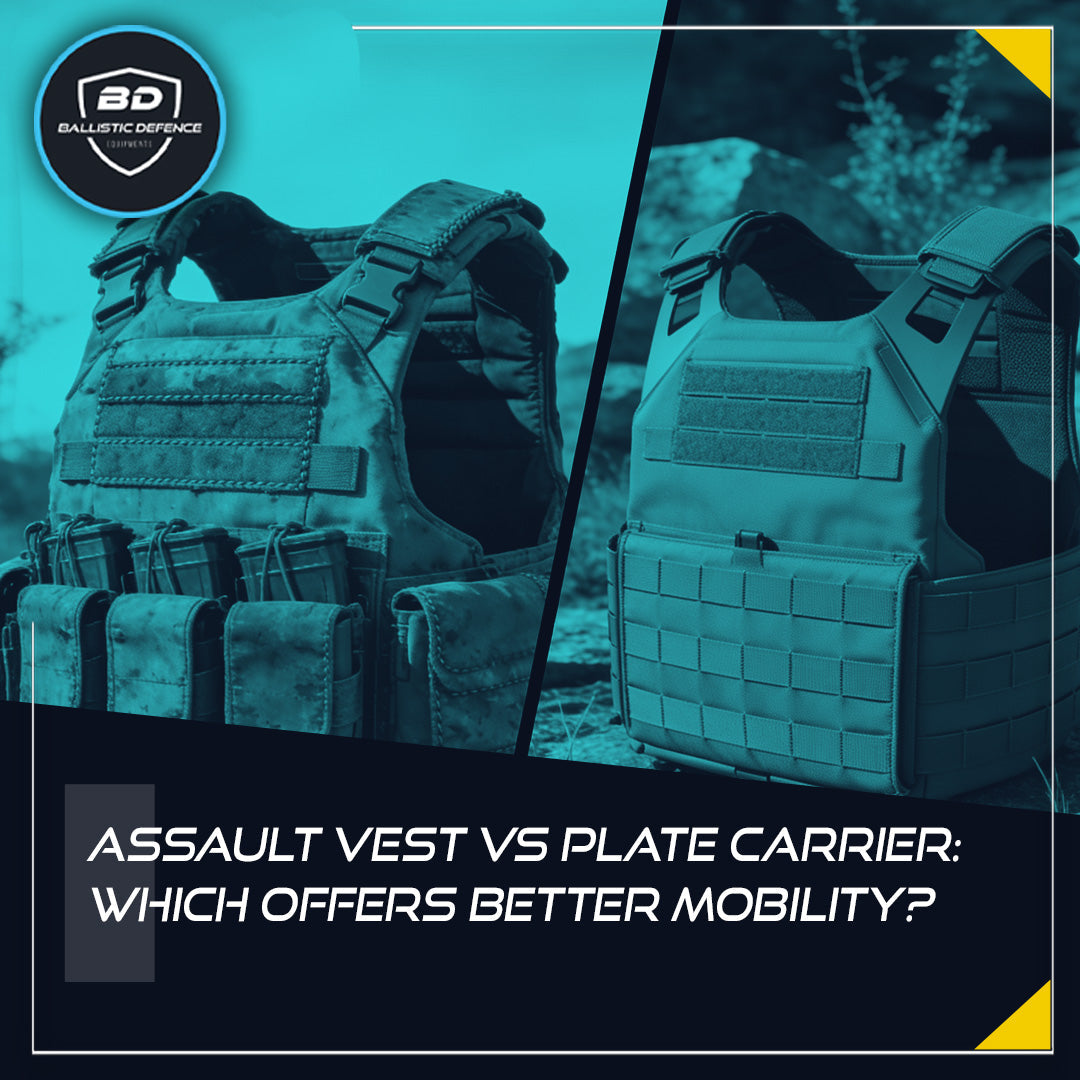
When choosing tactical load-bearing gear, one of the most common questions is whether an assault vest or a plate carrier offers better mobility. At first glance, the answer may seem simple, but in practice it depends on how the gear will be used, how much equipment needs to be carried, whether ballistic plates are required, and how important speed, flexibility, and endurance are in real-world conditions.
Both systems have clear advantages. An assault vest is often preferred for lightweight organization and quick access to gear, while a plate carrier is designed to support ballistic protection and modular load setups. The better choice is not always the one with more features. It is the one that best matches the mission, movement demands, and level of protection required.
What Is an Assault Vest?
An assault vest is typically a lightweight tactical vest designed to carry essential gear in a ready-to-access format. It usually focuses on organization, speed, and convenience rather than armored protection. This makes it appealing for users who want a practical load-bearing platform without adding the weight and rigidity that come with ballistic plates.
Because assault vests are generally lighter and simpler, they can feel more agile in situations where fast movement matters more than armor support. They are often a strong option for users who want to carry magazines, tools, communication gear, or small mission essentials in an organized way while maintaining comfort and range of motion.
What Is a Plate Carrier?
A plate carrier is designed to hold ballistic plates while also serving as a modular gear platform. Unlike an assault vest, its structure is built around protection first. That means it can support rifle-rated or handgun-rated hard armor plates, while also allowing pouches and accessories to be added based on the user’s setup.
The advantage of a plate carrier is clear: it combines armor support and load-bearing capability in one system. However, once plates and mounted equipment are added, it usually becomes heavier and more demanding to wear over extended periods. That extra capability often comes with a trade-off in comfort and agility.
Which One Usually Feels More Mobile?
In pure movement terms, an assault vest often feels more mobile because it is usually lighter, less rigid, and less restrictive than a loaded plate carrier. When a vest is not built around ballistic plates, the user can often move faster, bend more naturally, and experience less fatigue over time.
That said, mobility is not only about weight. It is also about how the load is distributed, how the vest fits the body, and how much gear is attached. A poorly configured assault vest can feel bulky and inefficient, while a well-balanced plate carrier can still provide strong mobility if it is set up carefully and not overloaded.
Why Plate Carriers Can Still Be Highly Mobile
Many buyers assume that plate carriers automatically reduce mobility too much, but that is not always true. Modern plate carriers are often designed to be streamlined, adjustable, and modular. When paired with the right plate size and a disciplined gear layout, a plate carrier can still allow efficient movement while adding the critical benefit of ballistic protection.
This is especially important for users who cannot separate mobility from survivability. In situations where armor is necessary, the best answer is not to avoid a plate carrier entirely. It is to choose one that keeps the profile efficient and avoids unnecessary bulk.
When an Assault Vest Makes More Sense
An assault vest is often the better choice when the user’s priority is lightweight load carriage, easy access to gear, and reduced fatigue during movement. If ballistic plate support is not a requirement, an assault vest can offer a simpler and faster solution that feels less demanding during extended use.
On Ballistic Defence, the LIAISON 1.0 Assault Vest fits this type of use well. It is a practical example of a tactical vest built for equipment organization and everyday field functionality without the plate-focused structure of a dedicated carrier.
When a Plate Carrier Makes More Sense
A plate carrier makes more sense when ballistic protection is part of the requirement. If the user needs to carry armor plates and build a modular setup around them, a standard assault vest will not provide the same role. In that case, the plate carrier becomes the more complete and mission-capable solution.
On Ballistic Defence, the ARARAT 2.1 Rapid Plate Carrier Vest is a clear example of a platform designed for secure plate support and tactical adaptability. For users who need both protection and equipment mounting capability, that type of setup is often the more realistic choice.
How Weight Changes the Mobility Equation
Weight is one of the biggest factors in mobility, but it should be understood correctly. A lightweight assault vest will usually outperform a plate carrier in speed and comfort if no armor is involved. But once ballistic protection becomes necessary, the comparison changes. At that point, the real question is not whether the plate carrier is heavier. It is whether the added protection justifies that extra load.
This is why buyers should avoid thinking in extremes. The lightest setup is not always the best one, and the most protective setup is not always the smartest one. The most effective choice is the one that balances movement, gear access, and protection according to the actual environment.
Mobility vs Protection: The Real Trade-Off
The real difference between an assault vest and a plate carrier is not simply comfort. It is the trade-off between mobility and protection. An assault vest can often offer faster, freer movement because it is not designed around armor plates. A plate carrier gives up some of that lightness in exchange for the ability to carry ballistic protection where it matters most.
For some users, mobility is the top priority. For others, protection cannot be compromised. That is why these two systems should not be viewed as direct competitors in every situation. They serve different roles, and the right answer depends on which role matters more in actual use.
How to Choose the Right One
You should lean toward an assault vest if your goal is lightweight movement, organized gear access, and reduced fatigue without the need for ballistic plates. You should lean toward a plate carrier if your setup must include armor and you need a platform that supports both protection and modular pouch placement.
If you are unsure, start with the threat level and the load requirement. If there is no realistic need for armor plates, an assault vest may offer the better mobility-focused solution. If there is a realistic need for ballistic protection, a plate carrier becomes the more complete and responsible option, even if it adds weight.
Building a Smarter Setup on Ballistic Defence
For buyers who want a lighter tactical platform, the LIAISON 1.0 Assault Vest is a practical starting point. For buyers who need plate support and a more protection-oriented system, the ARARAT 2.1 Rapid Plate Carrier Vest is the more suitable direction.
If armor is part of the plan, pairing a carrier with a plate from the Body Armor collection creates a more complete system than treating the carrier as a standalone item. That kind of setup is especially relevant for users who need a balance of modularity, protection, and mission-focused performance.
Final Thoughts
So, which offers better mobility: an assault vest or a plate carrier? In most cases, the assault vest wins in pure freedom of movement because it is lighter and less restrictive. But mobility alone is not always the deciding factor. If ballistic protection is necessary, a well-configured plate carrier can still offer strong movement while adding a level of capability an assault vest cannot provide.
The best choice comes down to purpose. If your mission is built around speed, organization, and lighter load carriage, an assault vest may be the smarter fit. If your mission includes armor, threat readiness, and modular protection, a plate carrier is usually the better long-term solution.